

Meet the Finalists
We proudly present our 62 Finalists for the 2026 ACAR Art Prize.
Xiaomin Mina Zhang
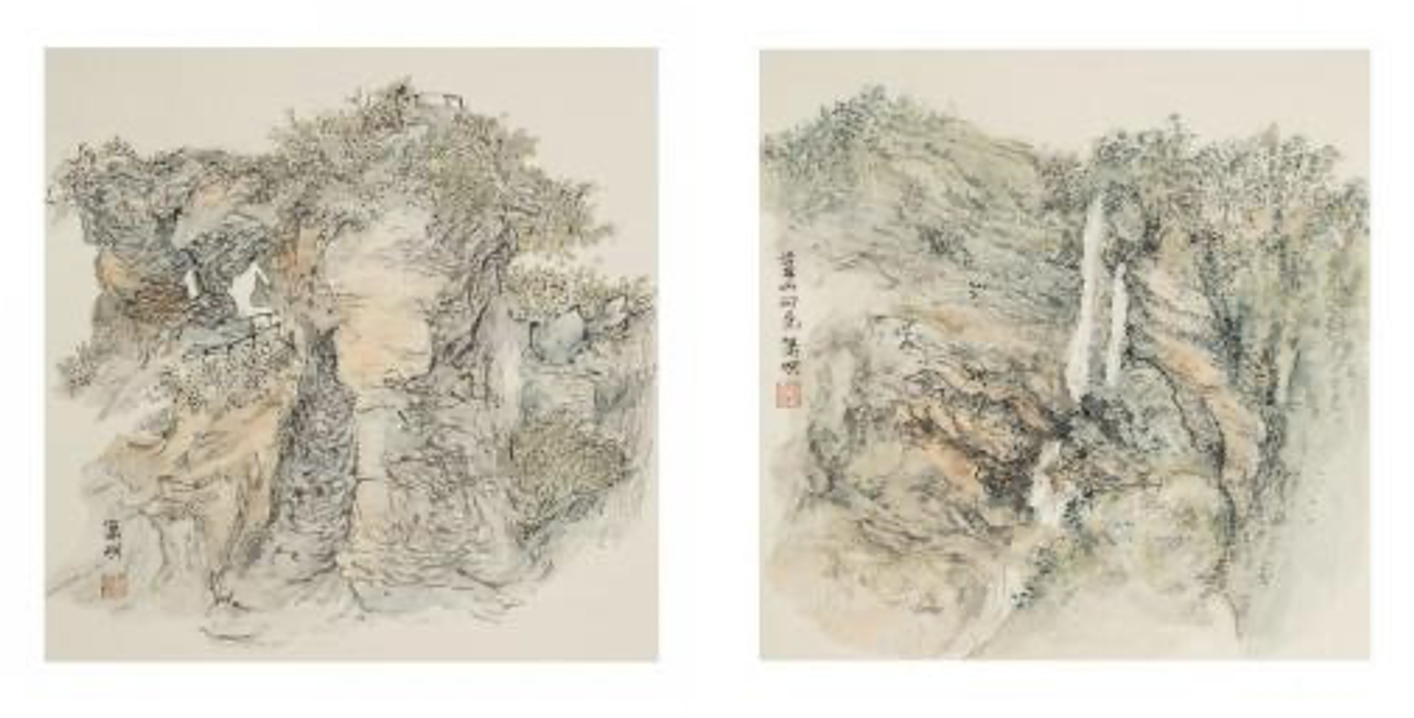
Title: Blue Mountains
“Blue Mountains” is a pair of paintings depicting Katoomba Falls and Orphan Rock on Dharug and Gundungurra Country. Through the visual language of traditional Chinese Literati painting, Xiaomin Zhang renders the Australian landscape with earth pigments and mo (Chinese ink), using rhythmic and textural brushstrokes.
As the mother of a first-generation migrant, Zhang approaches the Australian landscape with curiosity and awe, seeking to understand the stories and histories embedded within it. Painting, the medium she knows best, becomes a way of learning place—an intimate dialogue that bridges the cultural distance between her heritage and her future adopted home.
By blending the aesthetics of shanshui (mountain-and-water) painting with the Australian Landscape, Zhang creates a meeting point between two visual traditions. Her work invites viewers to experience nature as a shared language, one that nurtures connection and a sense of belonging across cultures.
Xiaoping Zhou
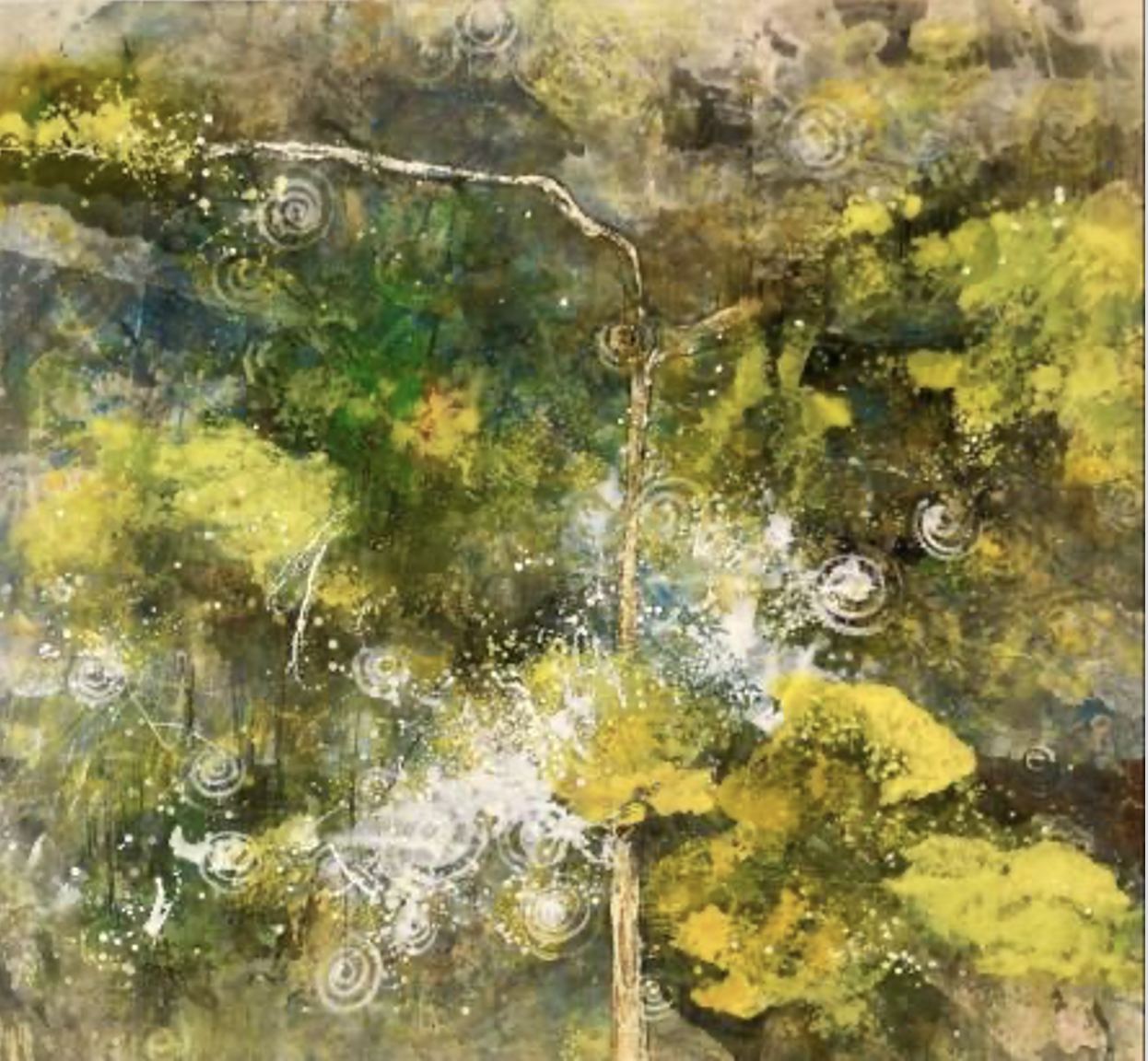
I was born and educated in China, since 1988 I have been actively engaged with Aboriginal communities in Arnhem Land and Kimberley. Over the years, I’ve had the privilege of living and working with Aboriginal communities, told traditional cultural from Aboriginal elders. My creative inspiration is deeply rooted in this immersion in Aboriginal culture, which has enriched my understanding of the land, the awe-inspiring beauty of nature, and the vital need for humanity to respect it. This work reflects a place I once called home—the Arnhem Land-a powerful, mysterious, and spiritually profound landscape that lies at the heart of my artistic expression. At the same time, I live within Australian society, and my creative concepts are shaped by Western cultural influences as well. In this way, I navigate between three cultural realms: Chinese heritage, Aboriginal traditions and Western artistic principles—blending them to tell my story of Australia.
Title: Life in Arnhem Land
Xiaoxue Zhang
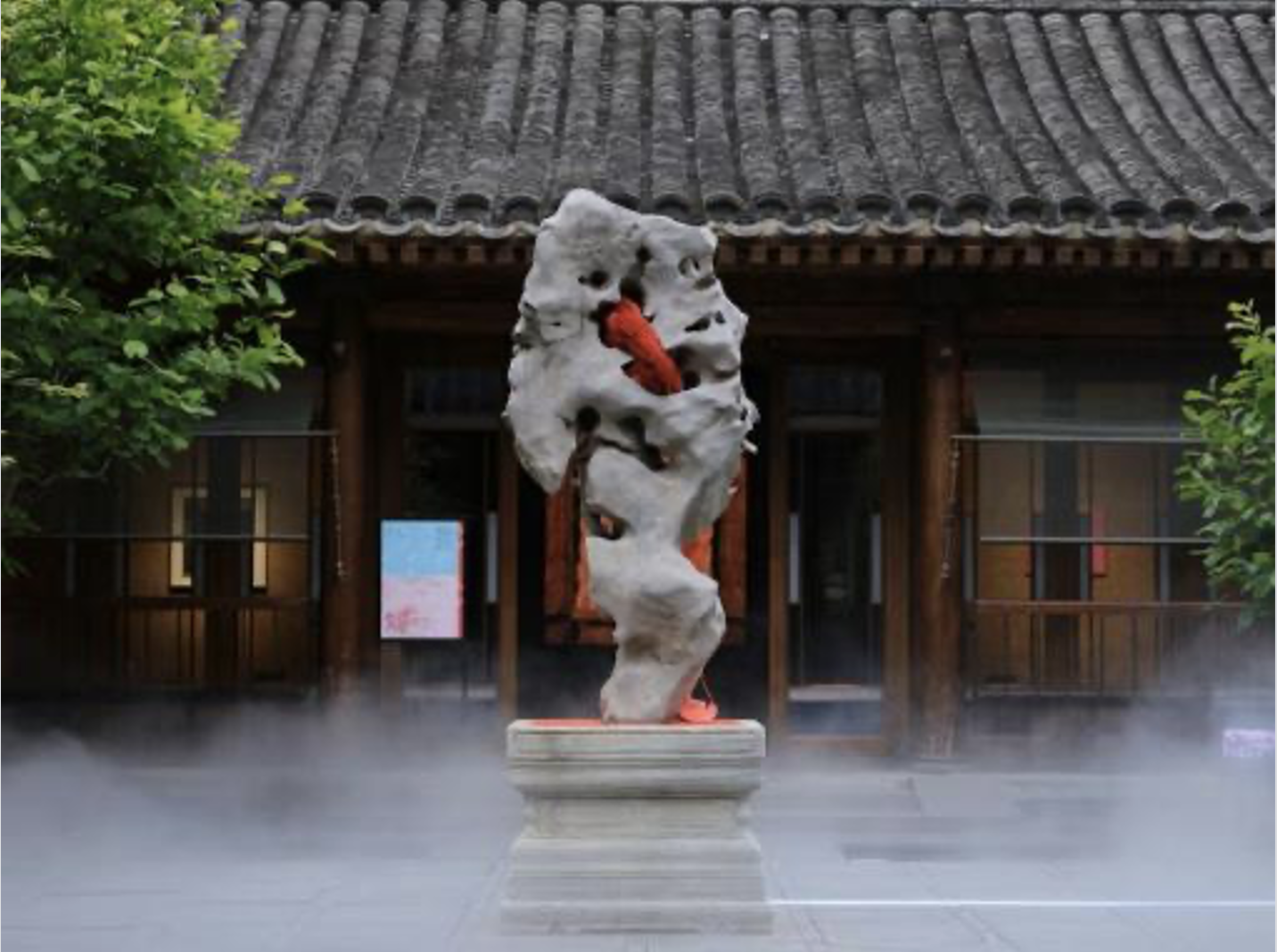

Title: To install a heart in Taihu rock
To Install a Heart in Taihu Rock is an ongoing artistic project. Previous iterations involved attaching hearts to actual Taihu rocks. In this new version, the artist uses xuan paper to take rubbings from the surfaces of different Taihu rocks, before inserting a “heart” constructed from individually dyed red silk fragments and mechanical components. The result is a field of Taihu rocks, each endowed with its own pulsating core.
To “install a heart” is also to reconfigure the idea of Chinese landscape. As symbolic objects of literati culture, Taihu rocks have long represented a site of spiritual withdrawal and imaginative escape. By embedding them with a passionate, living heart, the work establishes a tension between past and present, carrying tradition into the contemporary moment.
Xifa Yang
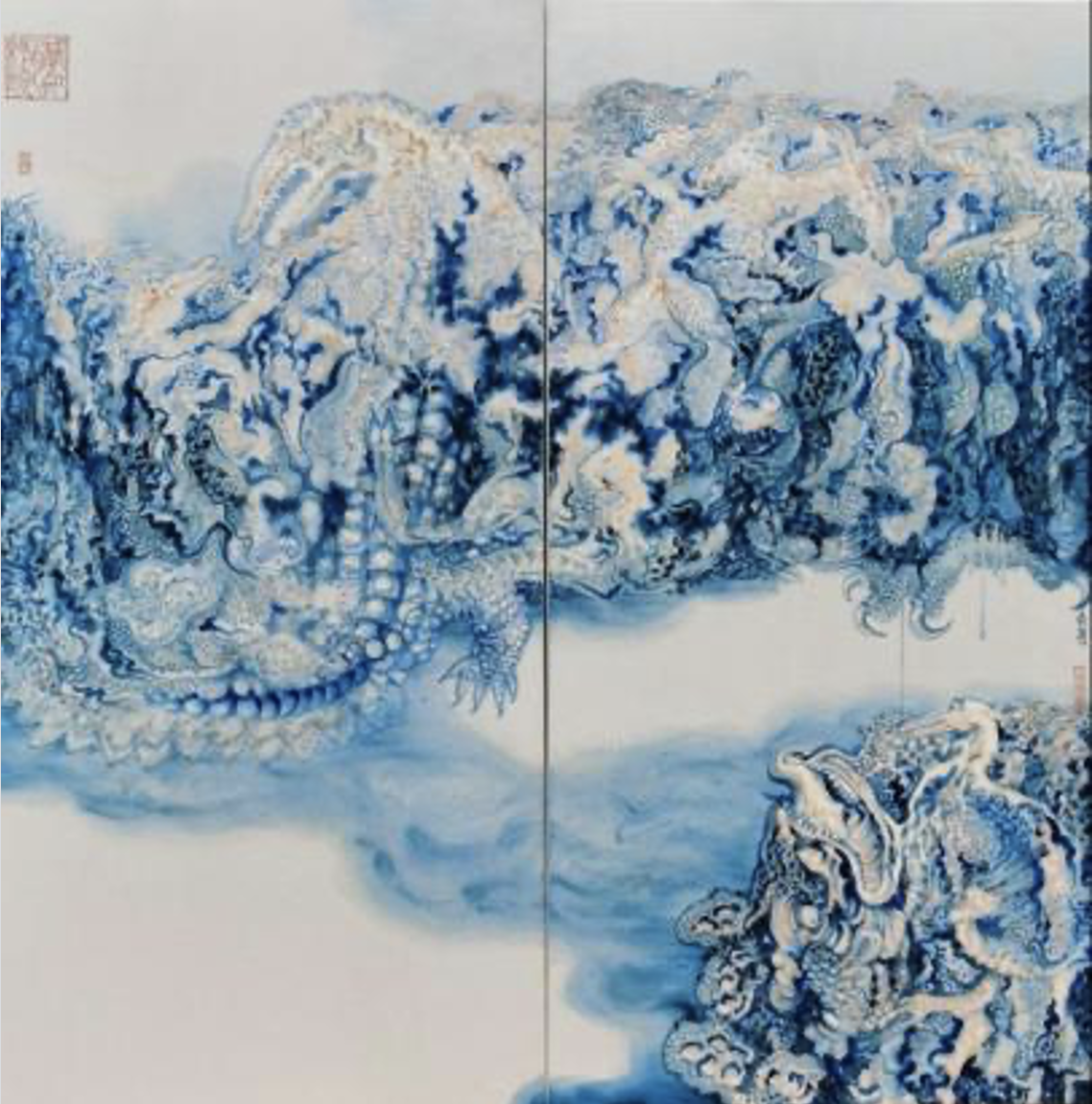
Title: Perceptual Cell
The long-held belief in visual culture that “seeing is believing” has been fundamentally challenged by advances in AI, neuroscience, and biotechnology. What is visible to the human eye is often no more than surface phenomena, rather than underlying essence. Truth, when approached through perceptual or spiritual reflection, exceeds the limits of appearances; this premise underpins the artist’s painterly inquiry.
In Perceptual Cell, a hybrid visual field emerges through the interweaving of Chinese blue-and-white aesthetics, animals as understood within Australian Indigenous knowledge systems, and cellular forms. The resulting landscape oscillates between mountain and water, resisting fixed categorisation. Subtly embedded within it are traces of contemporary life, including surveillance systems, signals, and optical devices, revealing an otherwise invisible dimension of reality.
Xin Cang
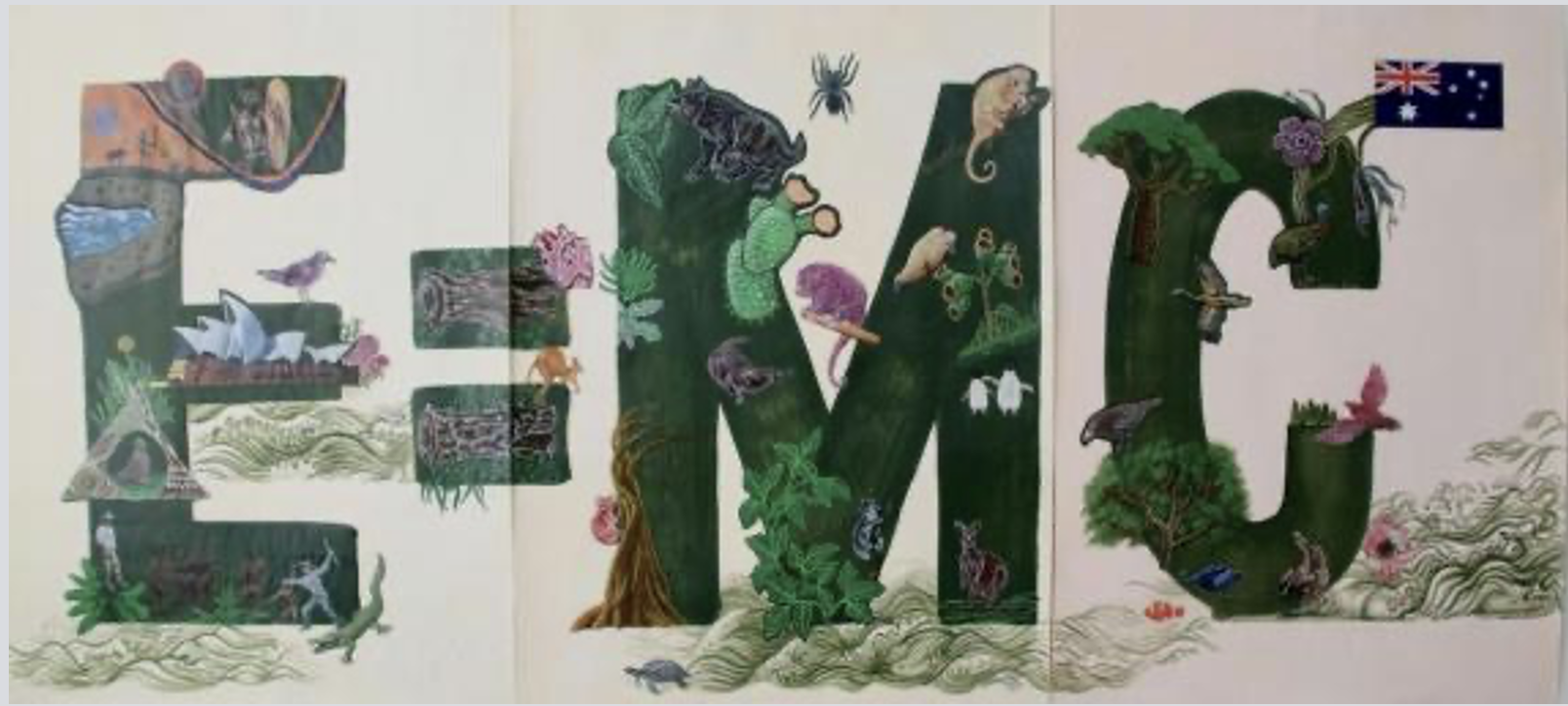
Title: Disenchanted Australia
This work explores the relationship between artificial intelligence and life forms, or the relationship between dispelling charm and restoring charm.
The dispelling and resuming the charm are two very important concepts in postmodern thought. Scientific and technological rational logic has an unspeakable status and development in the whole earth civilization, which has had an immeasurable impact on the whole social form and the process of human science and technology.
I have been to Australia many times and was deeply shocked by its unique geographical appearance and ecological environment. I use Einstein's law of conservation of energy to illustrate the far-reaching impact of theoretical physics and modern science and technology on the human earth. Although Australia's natural landform is very unique, it cannot escape the alienation and progress of human geography and artificial science and technology.
Xue Geng
Title: Seven-Day Dream
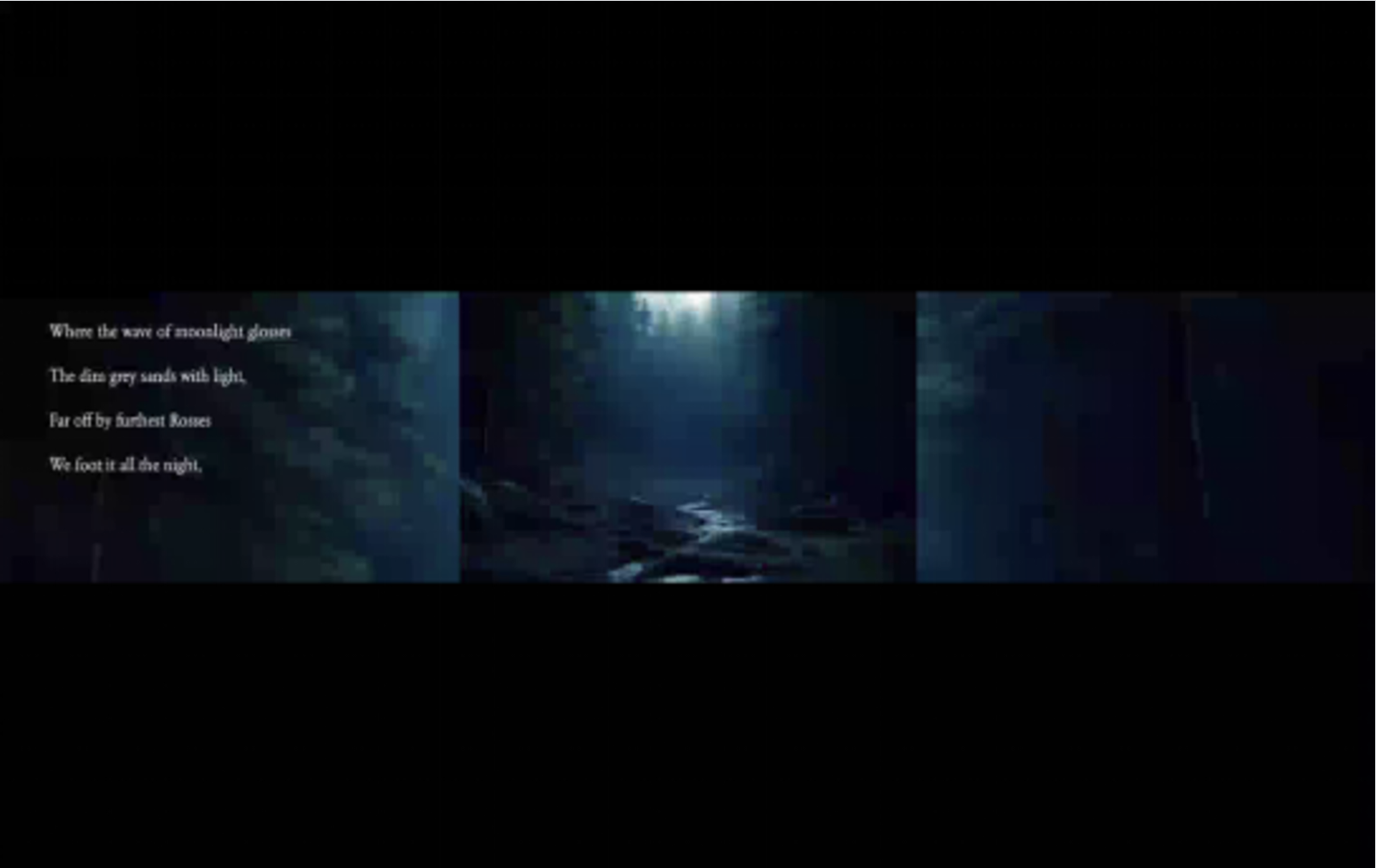
Seven-Day Dream is a three screen- poetic video poem-play. (a series of glass sculptures produced a 23mins film ). It forges a “visual prism” (the core artistic creation) co-constituted by heat-sculpted glass, traditional cinematography, and AI-generated motion to survey an inner landscape.
These media collectively emphasize the casting, generation, and flow of light. It is not only a visual language but also precisely the conceptual pursuit of the work. It follows eight children-transparent glass animals, journeying through a limbo between dream and data. In this refractive space—which mirrors the Aboriginal Dreamtime, the literary Celtic Otherworld, and Eastern thought—they search for a lost home, a true heart, and the essence of self.
The play, structured in seven acts, depicts the spiritual process from loss to awakening. It reveals: transform the gaze, the landscape renews itself; love, compassion, and wisdom are the universal light by which humanity transcends the narrow to behold the vast.
Yongji Shen
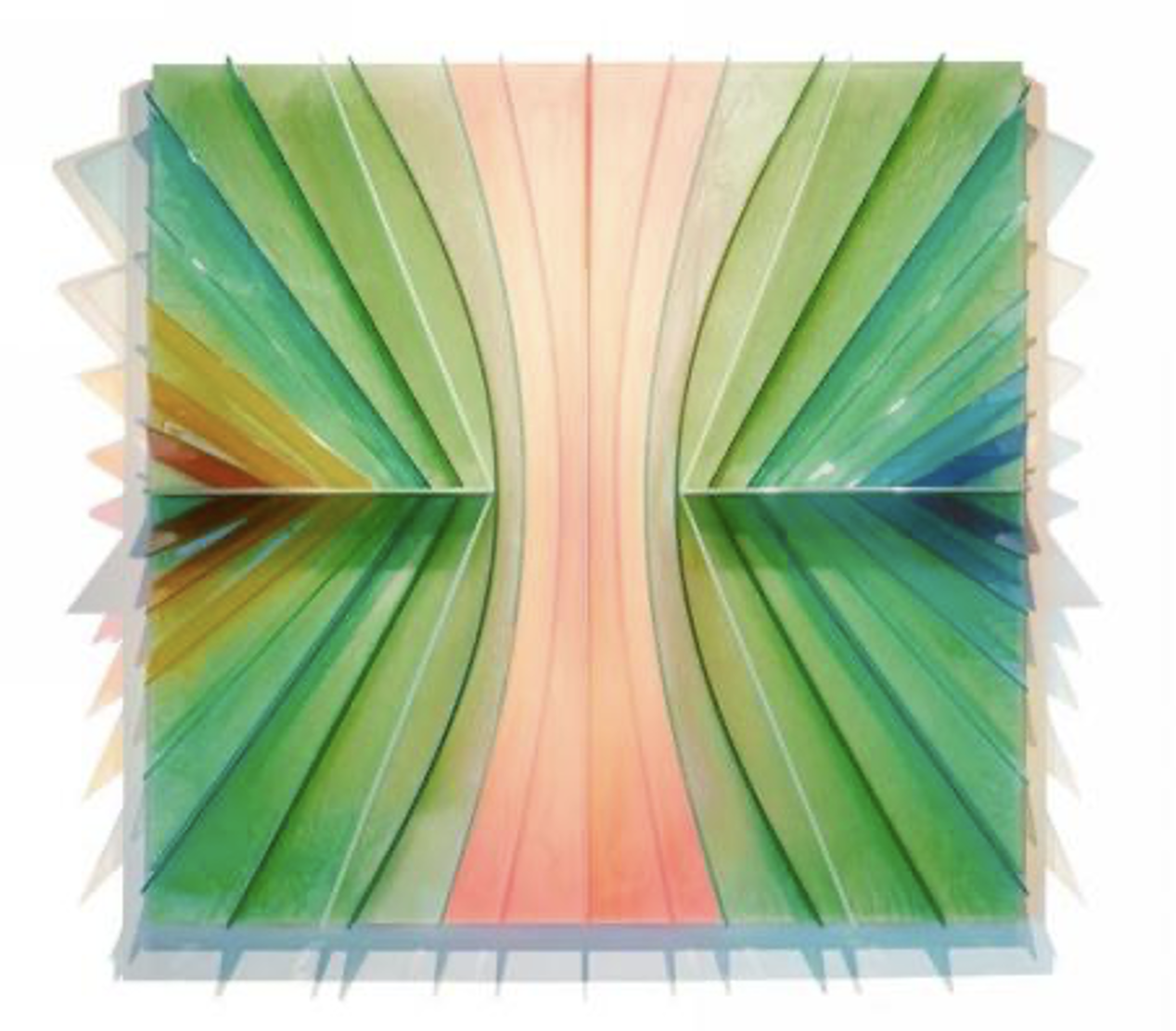
Shaped through processes of transformation and accumulation, the work evokes the fleeting moment of Awakening of Insects, where tenderness and resilience emerge from mud and stillness. In an almost imperceptible shift, rain gives way to clarity, rekindling a long-suppressed sense of hope and marking the quiet beginning of a new cycle of life.
The sculpture brings together casting and metal inlay techniques, allowing diverse metals to coexist through material and chromatic interplay, while standing in sharp contrast to the fragility of acrylic. This tension between conflict and integration articulates a condition of resilience within vulnerability and renewal through reconstruction, positioning the work as an ongoing response to the present.
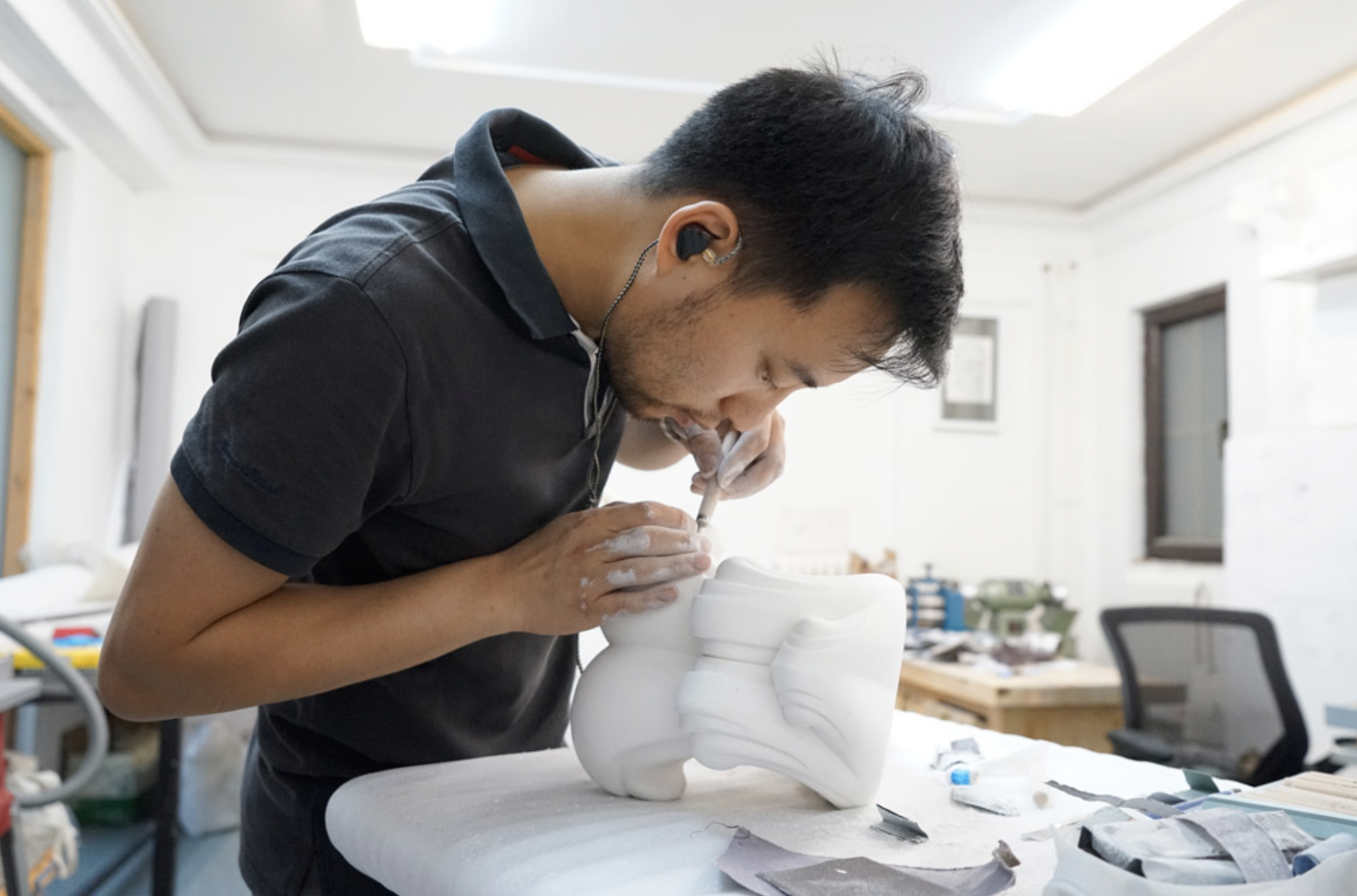
Title: A Clearing After Rain
Yongliang Yang
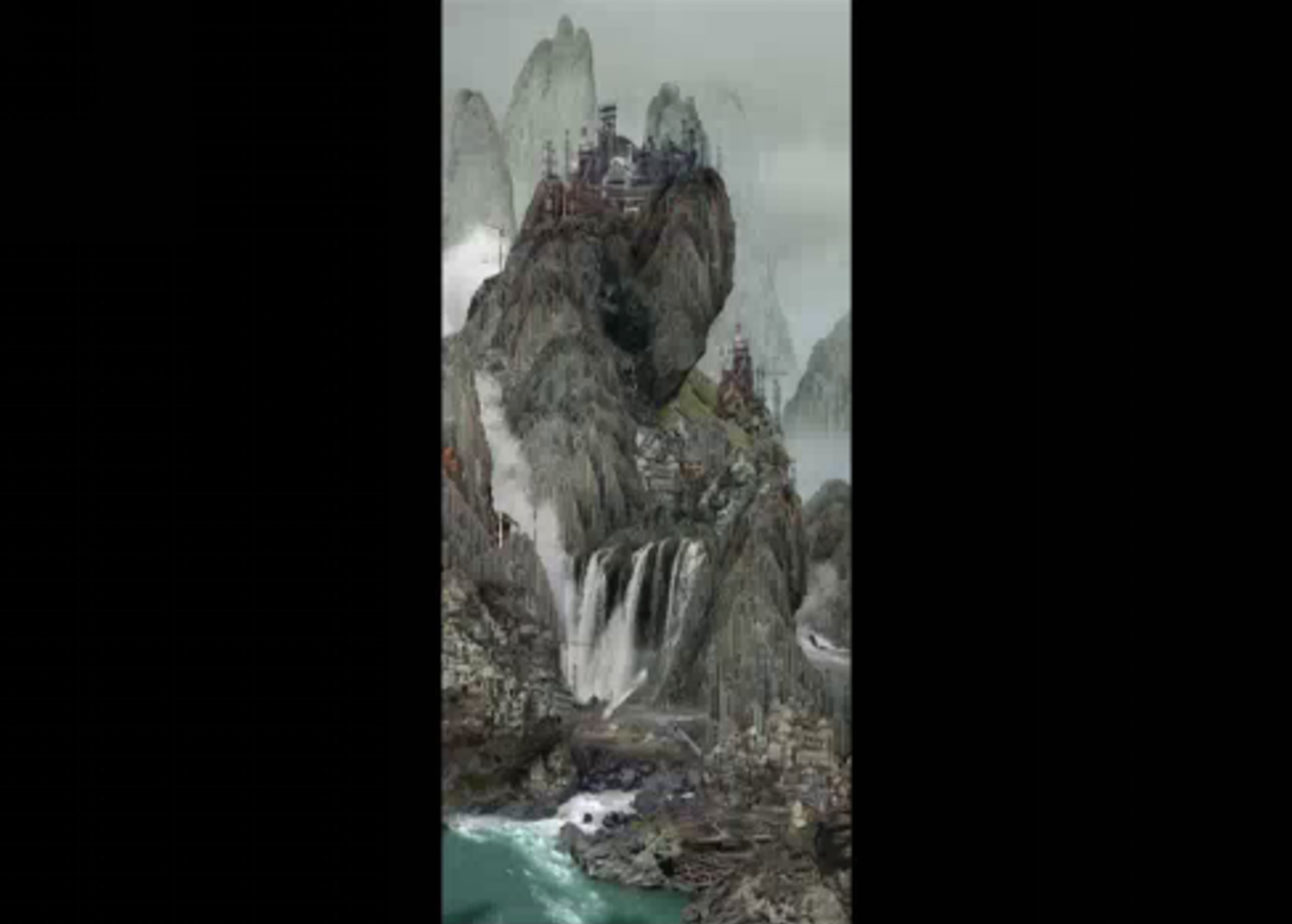
Title: The Falls
The falls is a 4K video featuring a surreal and dystopian industrial landscape juxtaposed with nature—the splendor of waterfalls in New Zealand and Iceland cascading through the mountainous. While the aesthetics pay tribute to the tradition of Chinese landscape painting, the urban details are composed of images documenting the skylines of Asian metropolises from the 2010s, beginning with my hometown Shanghai.
Over two decades of practice in art, I have traveled around the world to capture landscapes in diverse forms, which I then repurpose as brushstrokes in my digital compositions. I am dedicated to revitalizing the tradition of Chinese landscape painting while introducing a culturally specific perspective to global concerns. Through these landscapes I seek to share the awe I feel in front of nature’s beauty, as well as the sorrow that comes with witnessing its irreversible transformation.
Zheng Wang
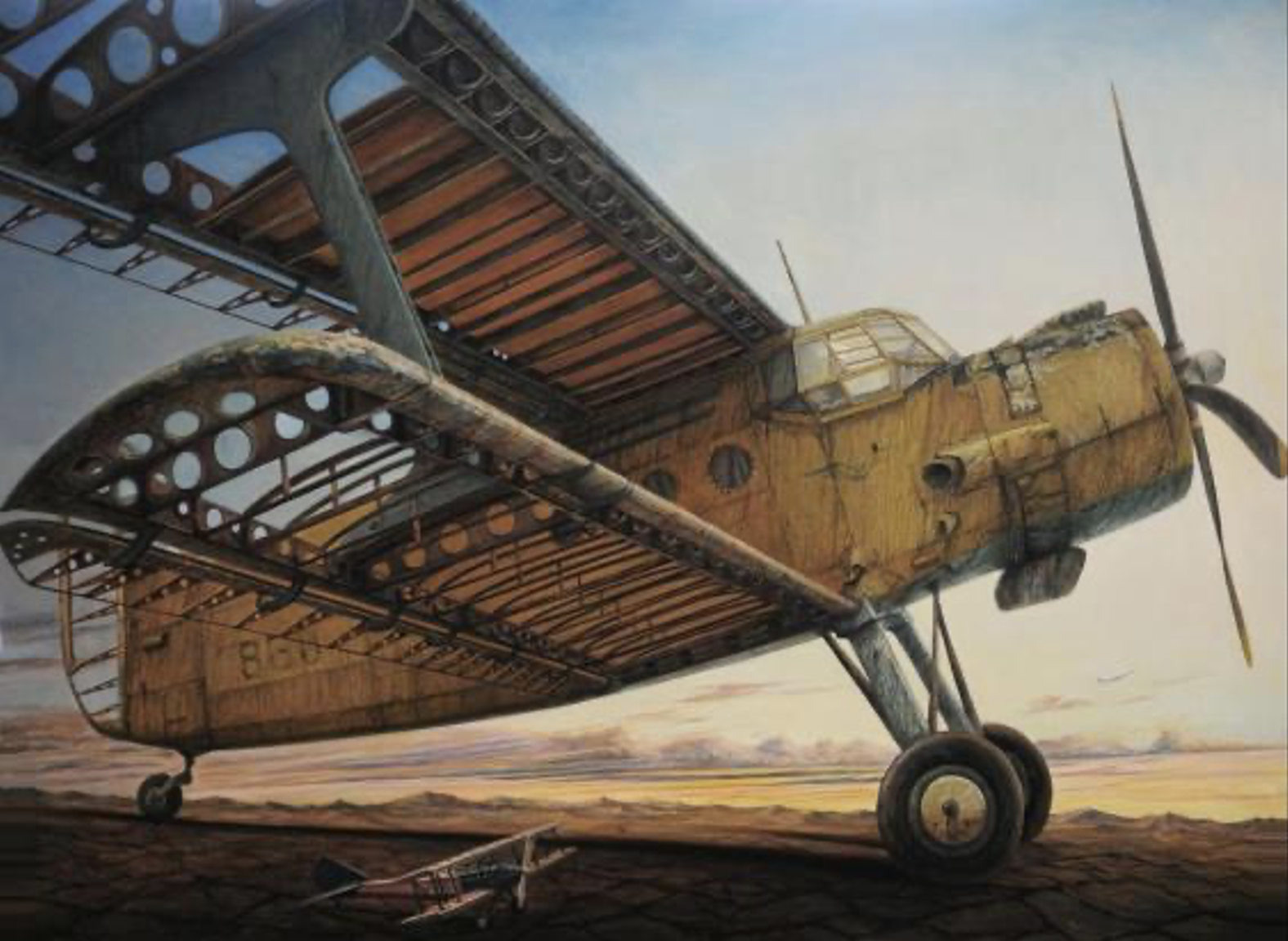
Title: You Are a Dream Beyond My Reach — A Pause to Hold Memory
The composition of an abandoned aircraft and surrounding ruins merges deeply personal memories with scenes drawn from historical consciousness, highlighting a balance between time, space, and aesthetic form. The aircraft’s former dialogue with the blue sky seems to find a quiet rebirth within the image, while the ruins suggest a renewed dimension of life across time and space.
Ziyuan Shi
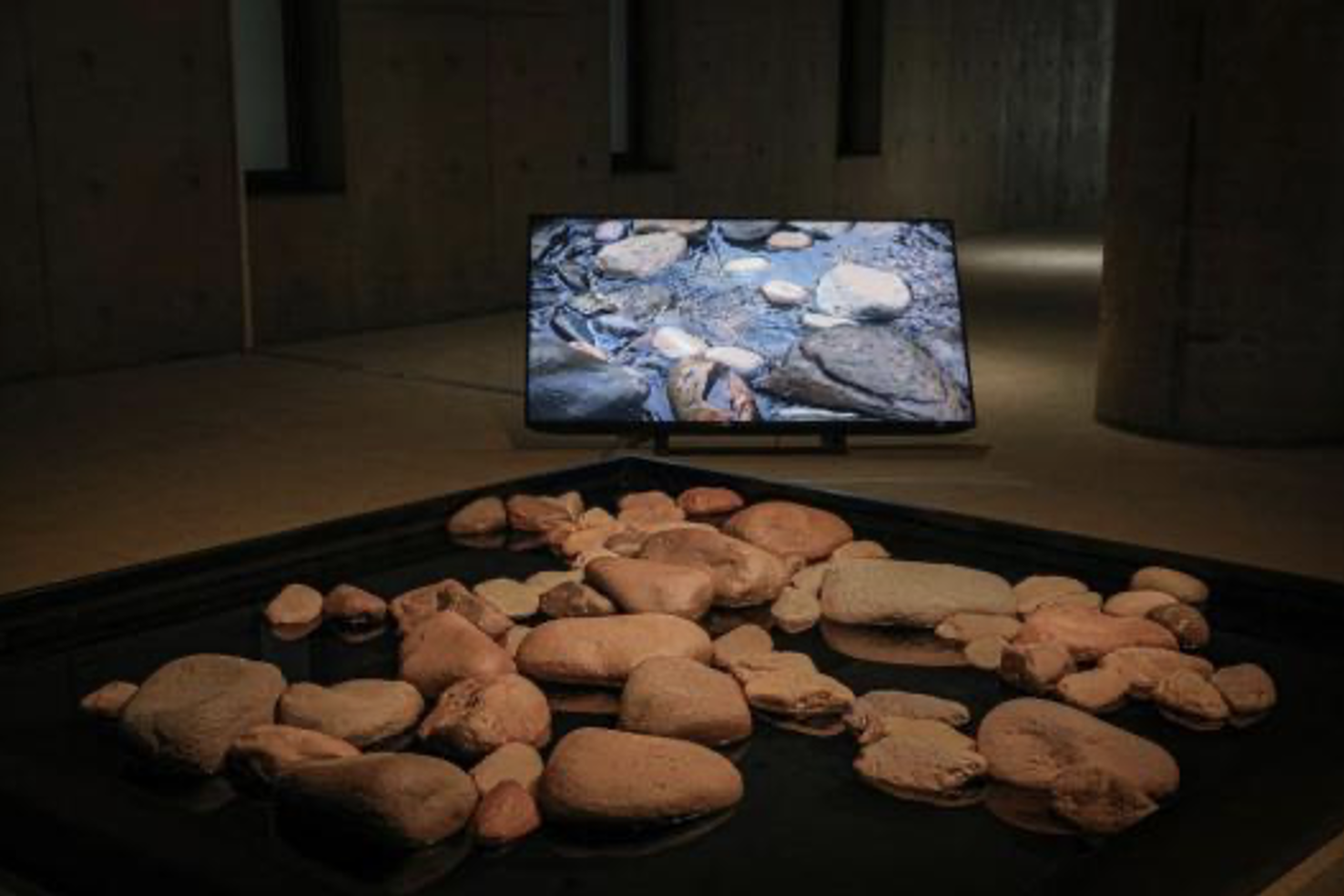
Title: Echo
During a research journey through Australia, I was left with a lasting impression of Uluru and the surrounding red-earth landscape of the Northern Territory, whose geological texture possesses a distinct material presence. In this work, I use ceramic, itself derived from earth and stone, to reconstitute the form of rock. Hollow ceramic stones are made buoyant, allowing them to float and generate sound through contact and collision in moving water, thereby reconfiguring familiar perceptions of both stone and landscape.
By bringing Chinese ceramic culture, especially the acoustic qualities of ceramic, into dialogue with the red-earth landscape of Australia, I use the resonance of these floating “red rocks” to evoke differing conceptions of nature, memory, and space.
Ziyao Sun
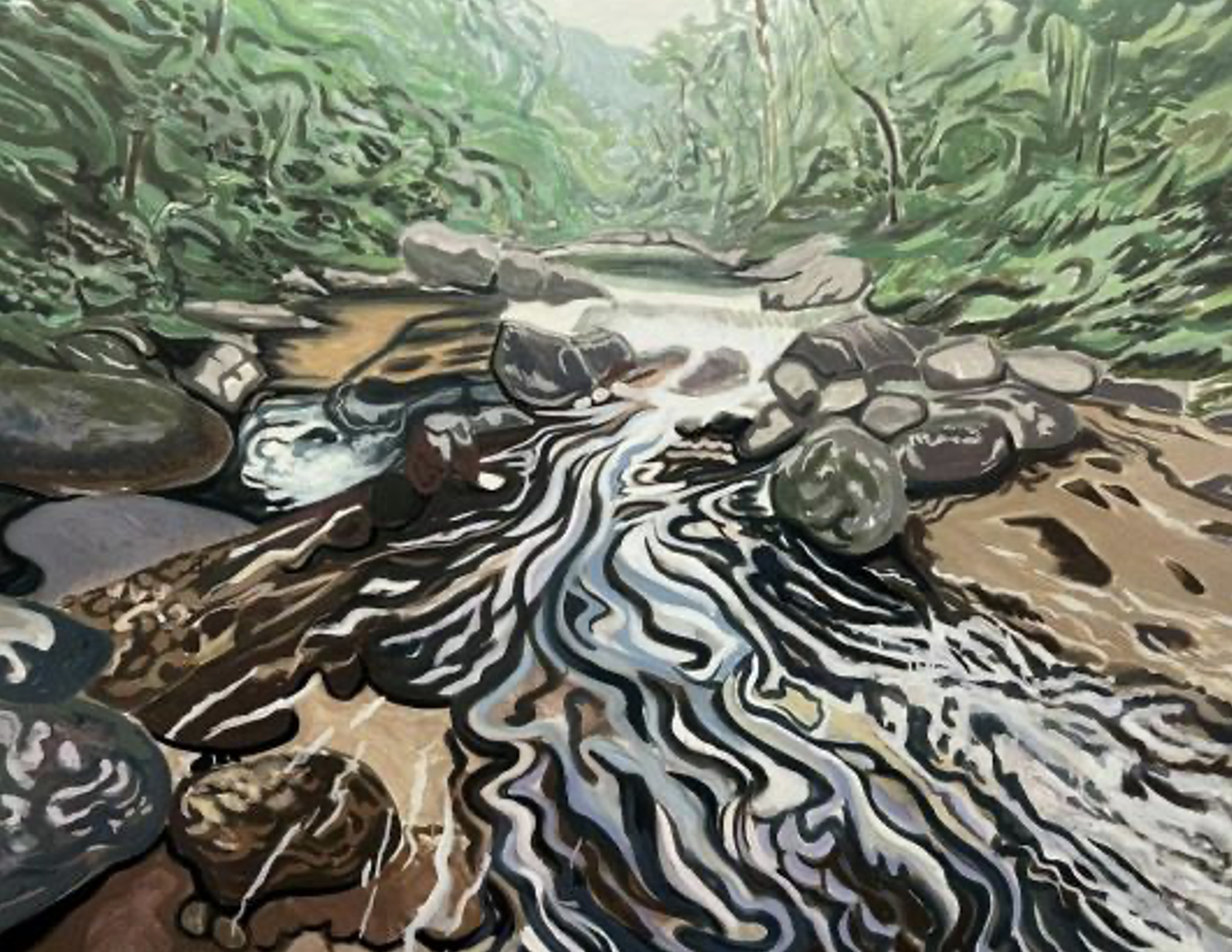
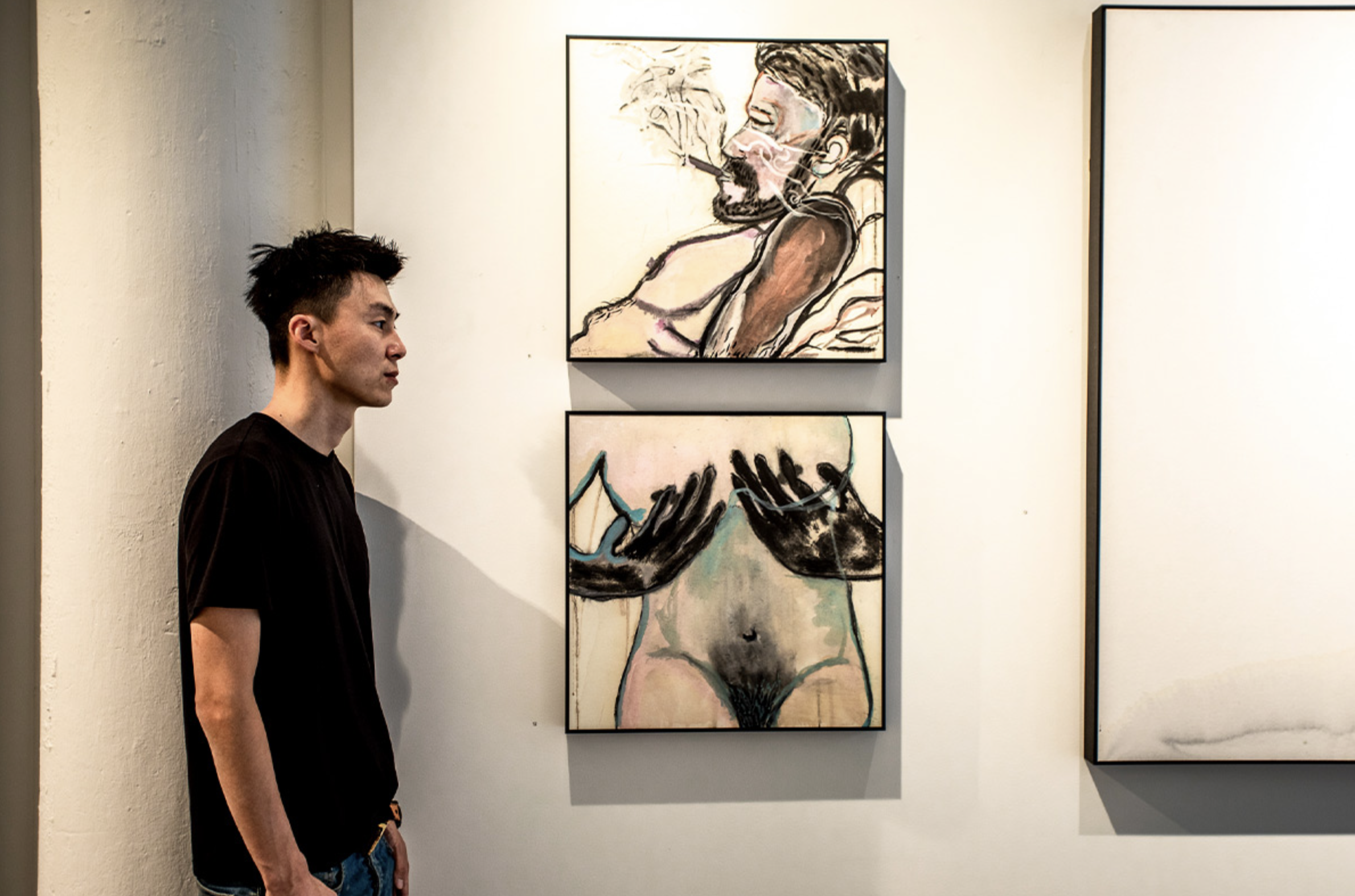
Title: Mountain stream