

Meet the Finalists
We proudly present our 62 Finalists for the 2026 ACAR Art Prize.
Linlin Li
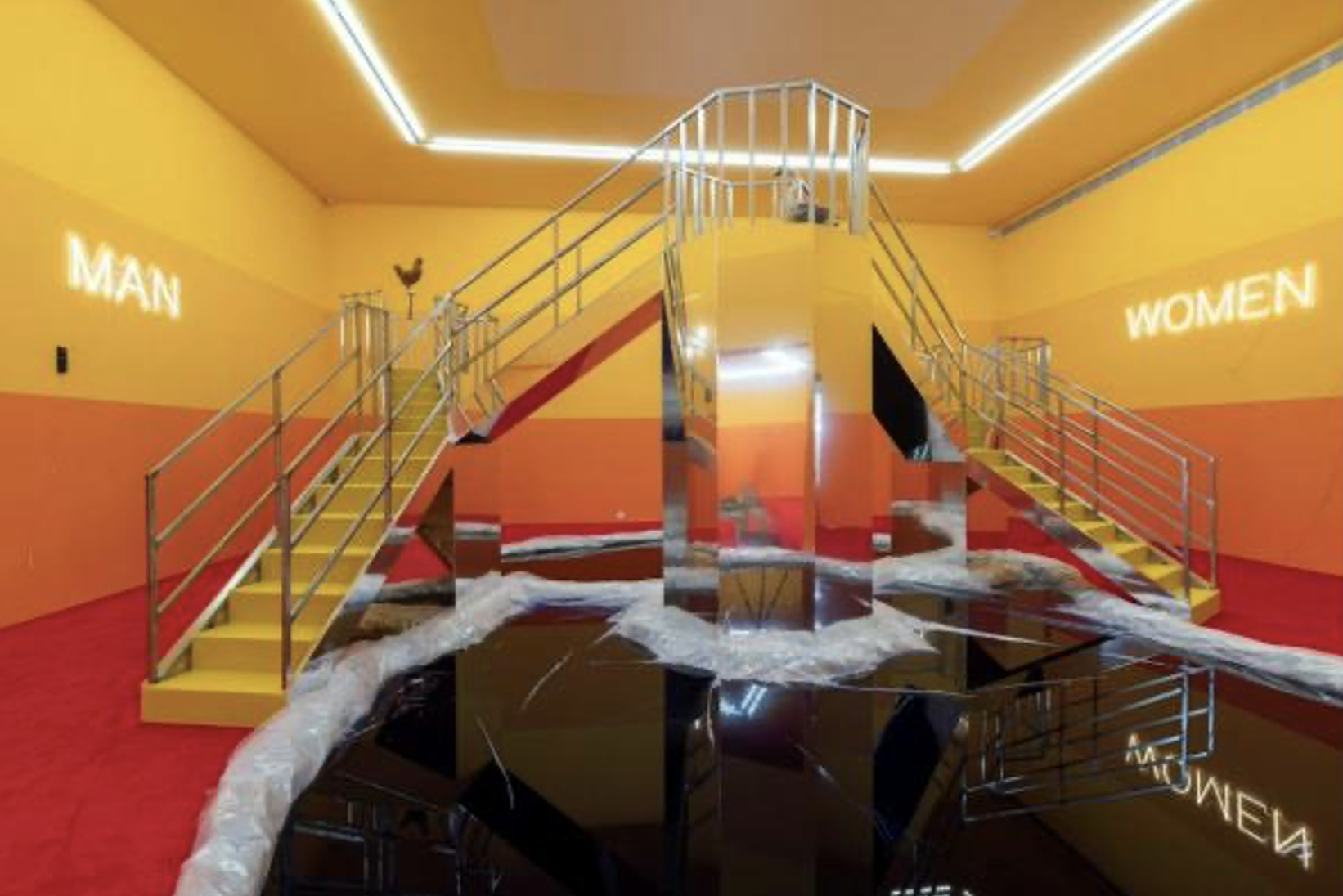
Title: Alaska cod
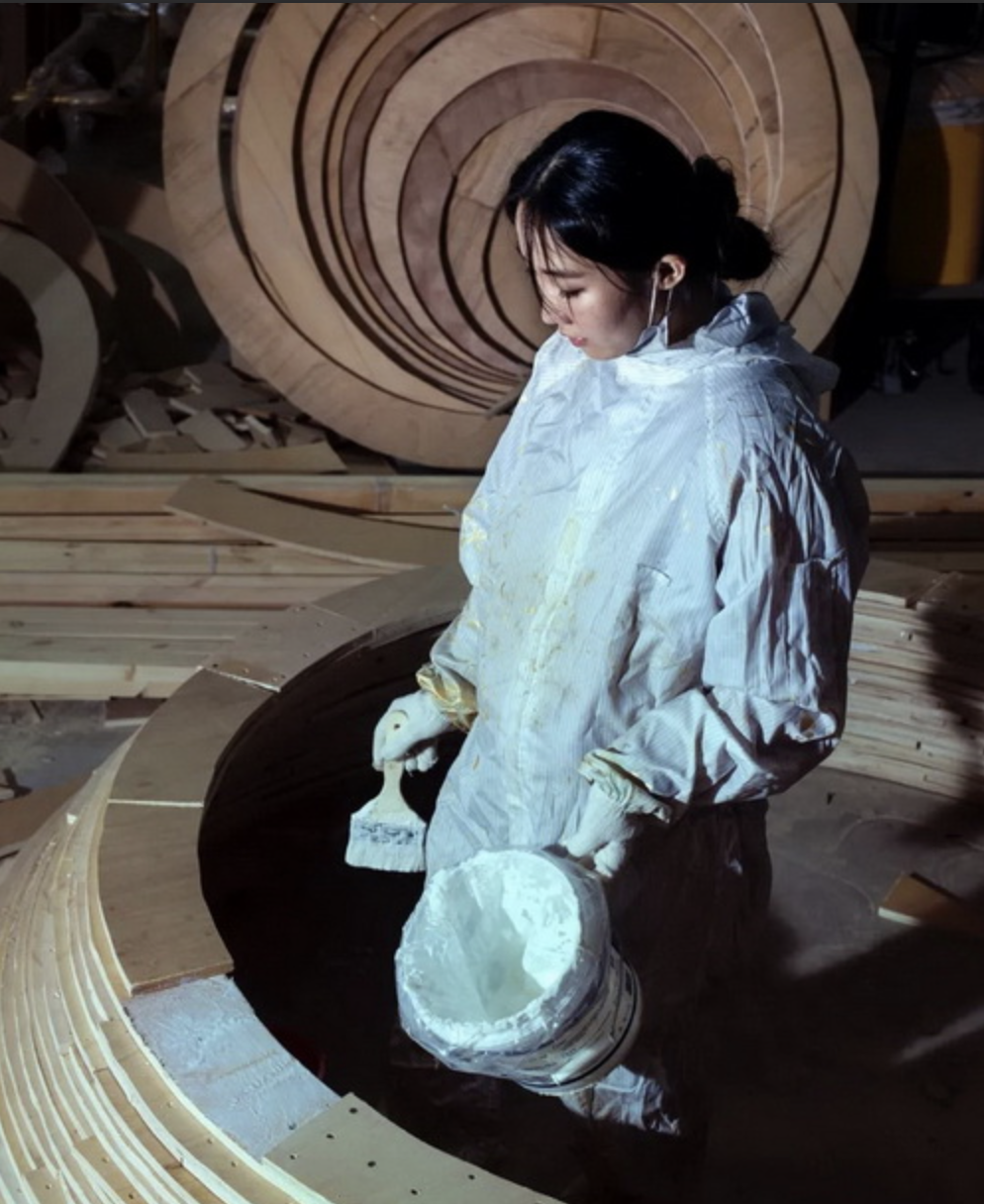
Cod of Alaska employs a theatrical installation to reimagine natural imagery, technological reason, and bodily experience within the conditions of contemporary life.
Taking the Alaskan cod as its central metaphor, the work considers how, amid globalisation and technological alienation, the individual may recover an inner wilderness through poetic acts of self-perception: a realm in which unyielding cod move through deep waters in search of a channel of light.
Martin Claydon
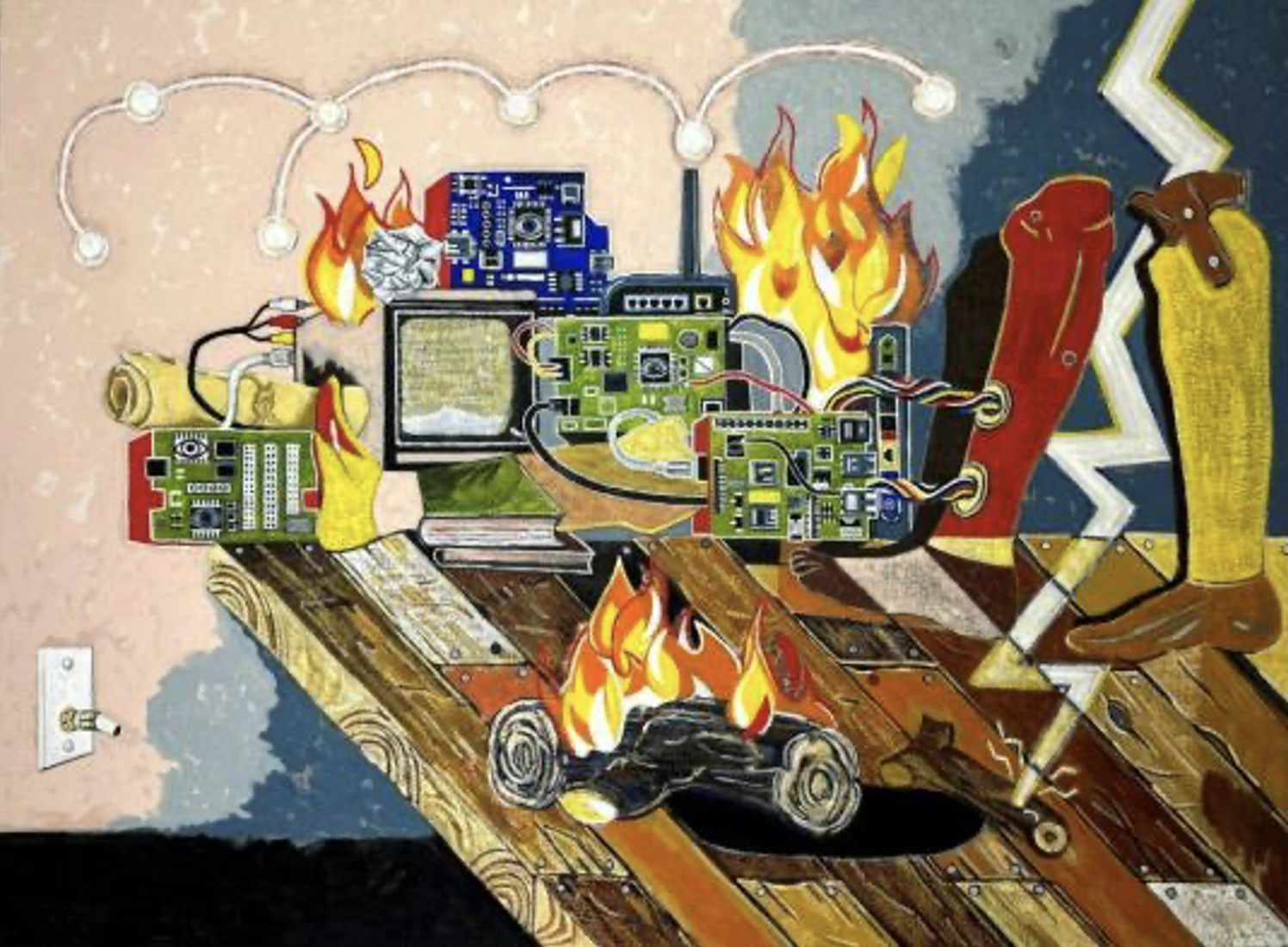
Title: Prometheus
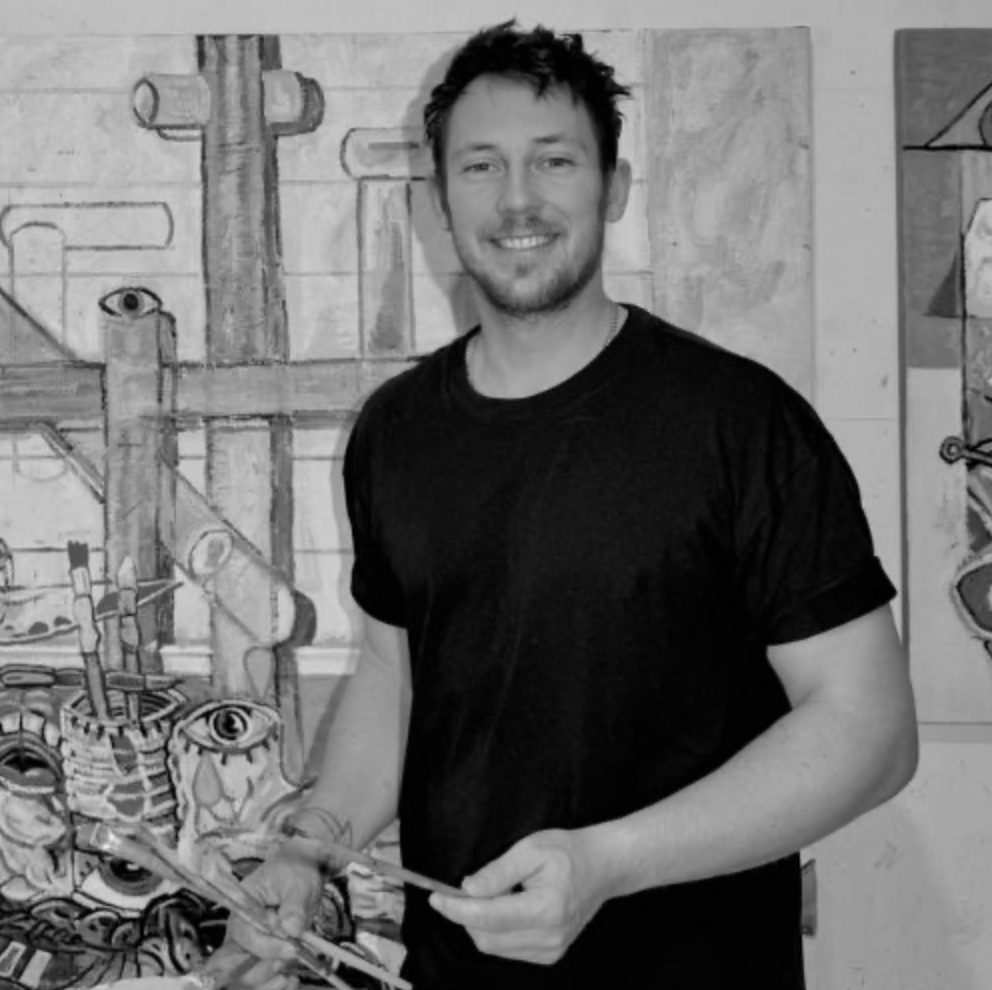
Claydon’s cross-cultural practice is shaped by his own immigration and is informed by the resulting evolution of personal identity. A visit to China in 2015 deepened his interest in Taoist ideas and inspired a poetic visual language of imagery that has expressive force in his works. His portfolio has attracted numerous collectors from the region.
His works enquire into the compelling question of how art can best capture the substance of human life. Should an artist aim to capture the spirit of a single, transient moment of experience? Or instead seek to express being human across all moments? The resulting discourse is a dynamic interplay of an individual’s memories transcending to the massive and eternal world of mythology.
Claydon’s study and experience of this interaction brings modern dilemmas into the light of ancient wisdom, speaking vigorously and directly to the individual, the society and the entire species.
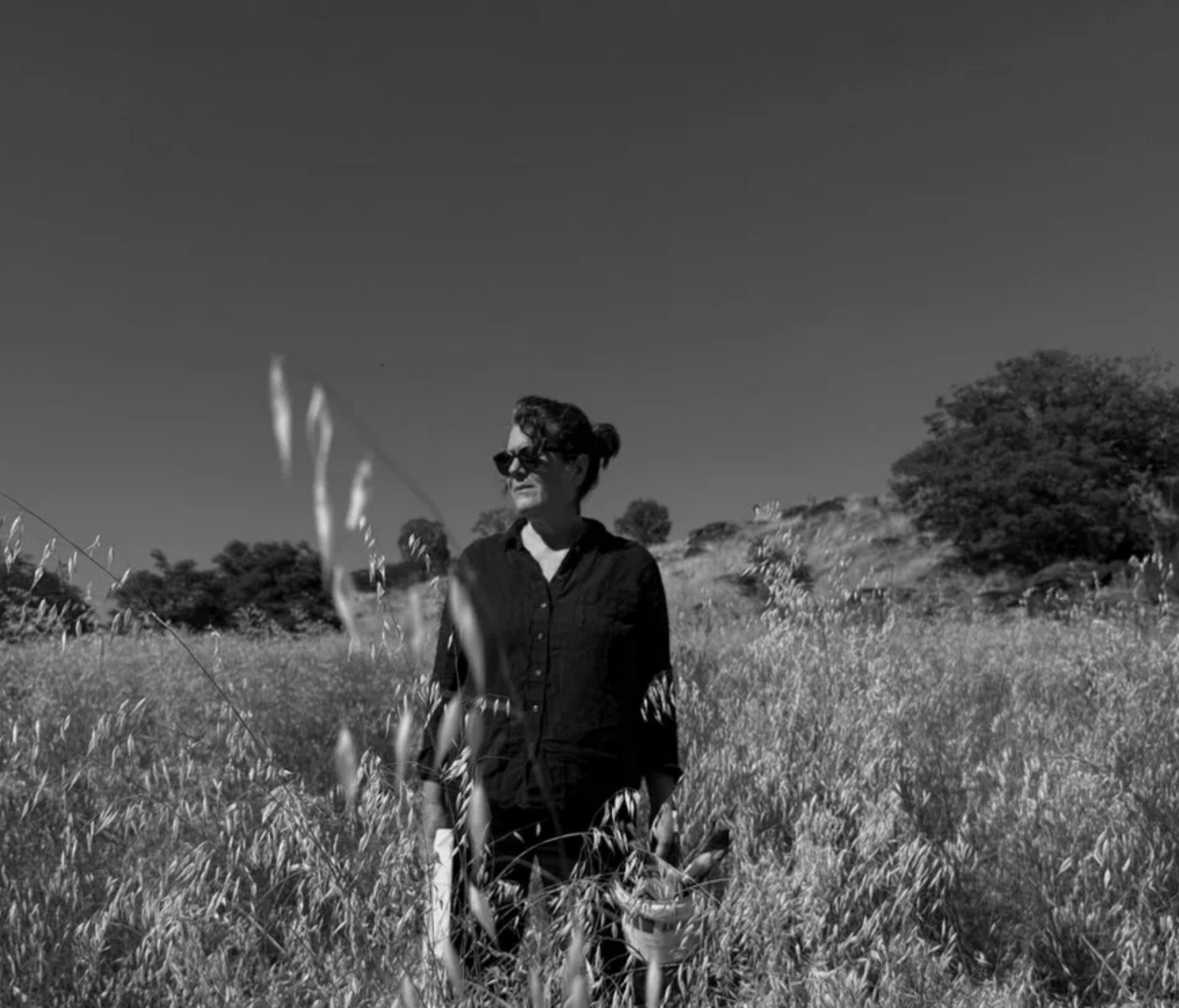
Michelle Hungerford
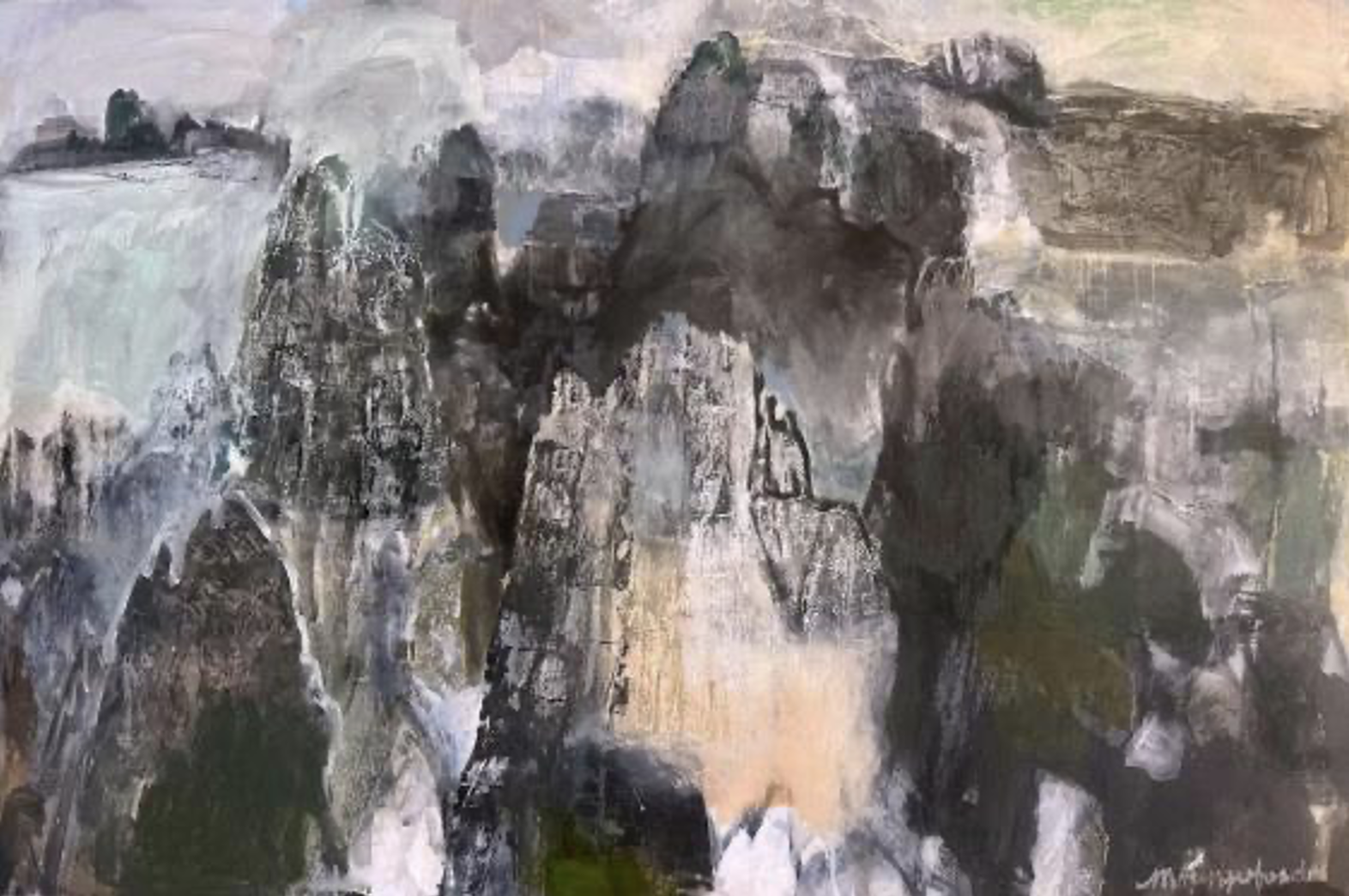
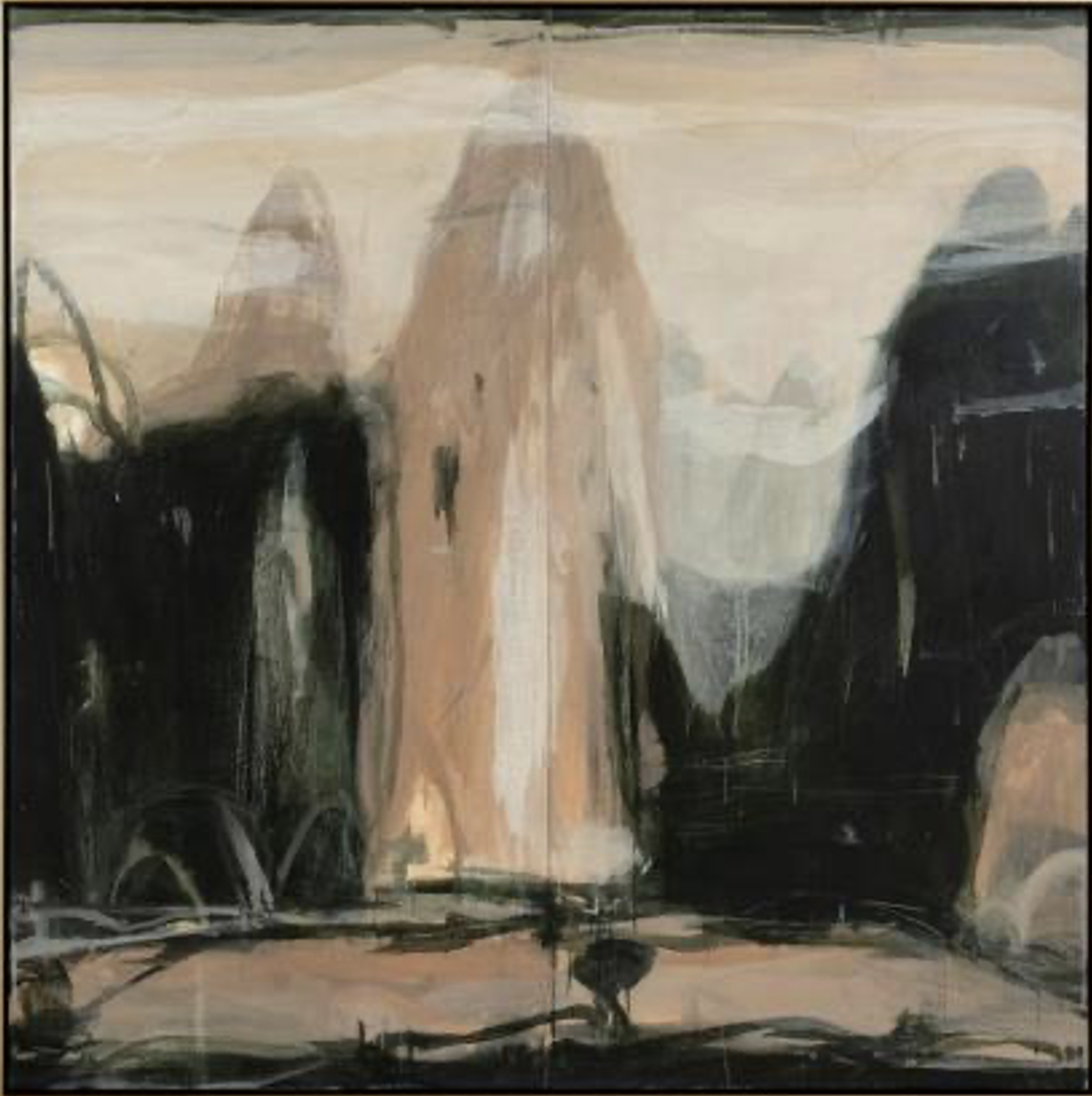
Title: Memories of many mountains
This painting evolved over many years and draws inspiration from three experiences.
In 2019 during an artist residency in Queenstown, New Zealand The Remarkables mountain range loomed large. This constant presence moved me to start this work.
When the residency ended the painting didn’t feel finished, so I rolled it up and brought it home.
That year, a devastating bushfire swept through the Blue Mountains in N.S.W. where I live. Constantly viewing the mountain landscape through smoke haze prompted me to unroll the work and pick up my paint brushes.
However, for the next five years, the painting hung on my wall at home, still unresolved.
In 2025, I found myself remembering the landscapes and artworks I had encountered on a trip to China I had made in 2010.
This moved me to once again pick up my paint brushes.
This painting holds the memory of many different mountains.
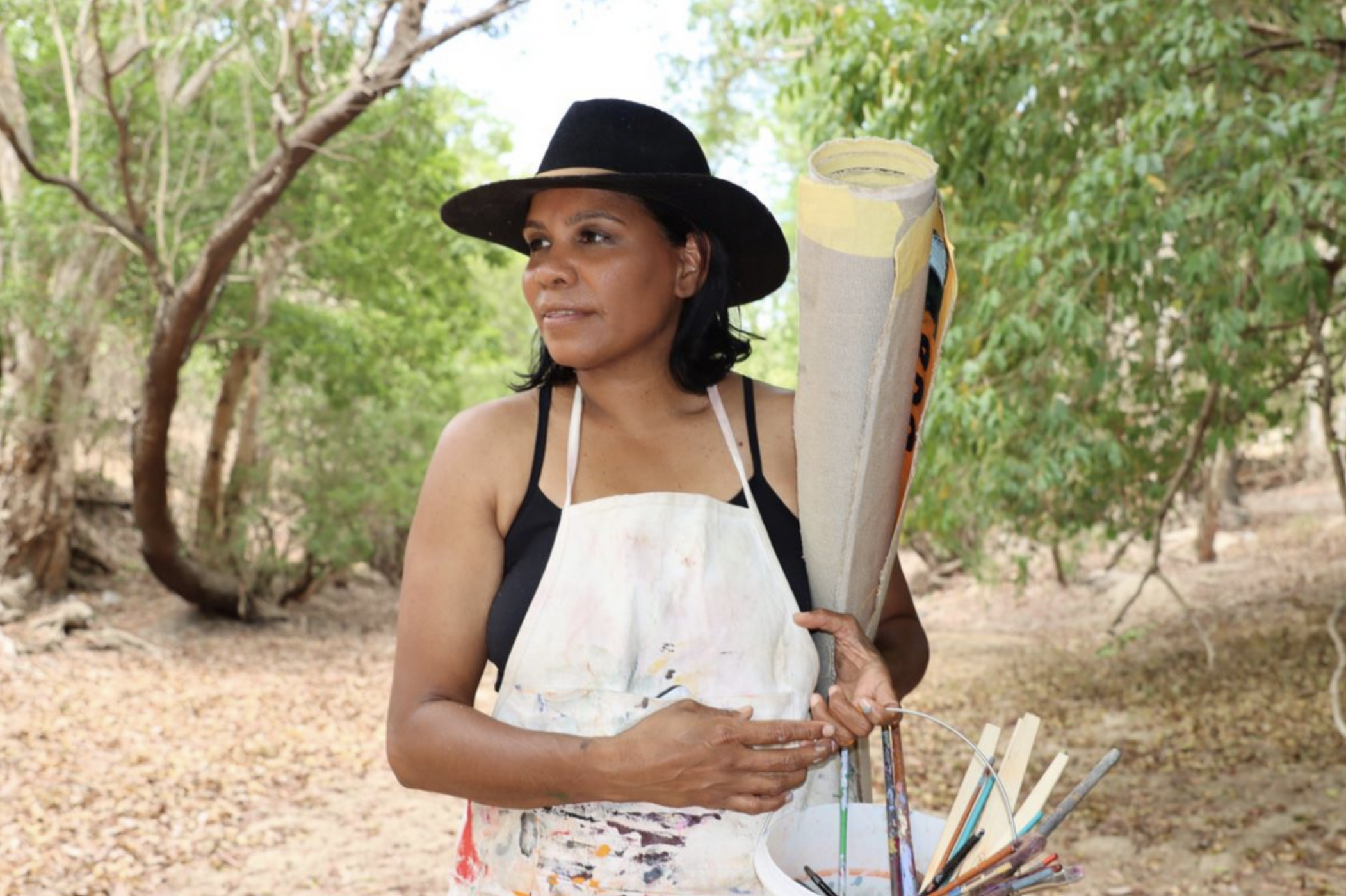
Naomi Hobson
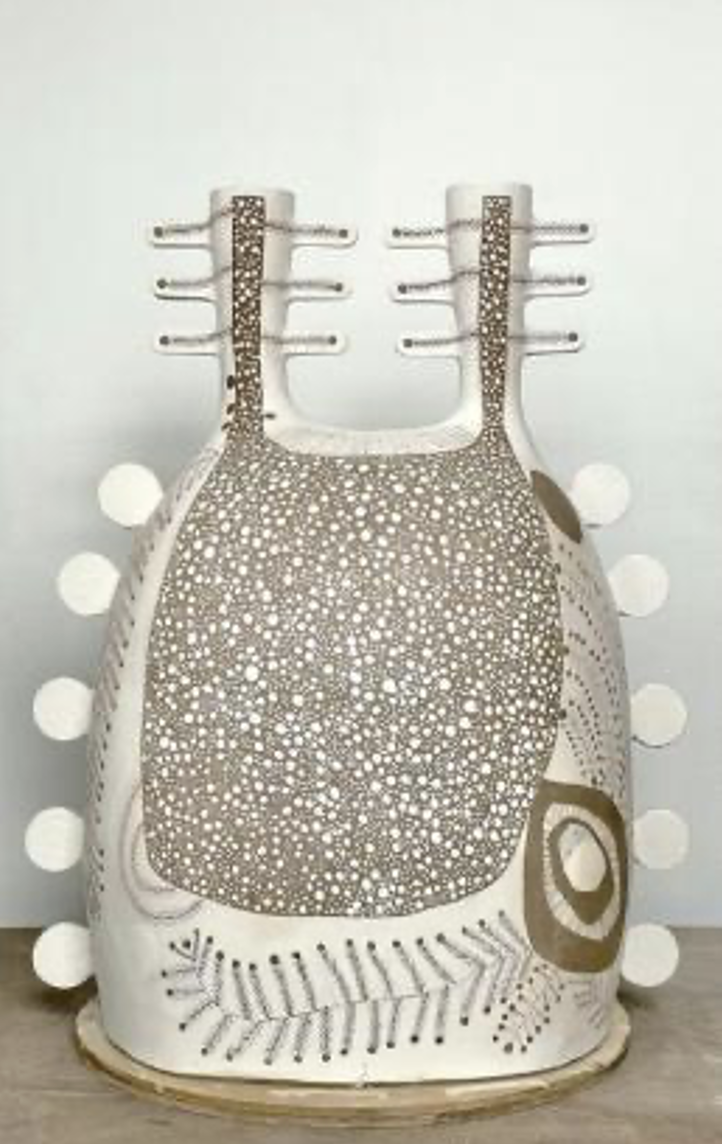
The dragonfly is a messenger. In my native language we call this 'Paanamul.' Paanamul carries stories across the water, between places, just like people do. On my Country, when the dragonflies arrive, it’s a sign the seasons are changing, the air feels light, the water runs clearer. It’s nature speaking. In Chinese culture too, the dragonfly brings transformation and new beginnings.
Both ancient and living cultures learn from the teachings of nature and we share an intrinsic connection to the rhythms of the land, the water and the sky; this is what binds us.
Both cultures have utilised clay for over a thousand years, and here, this process I borrowed an ancient Chinese technique I learnt for building large earthenware water pots to bring to life the story of Paanamul - the Dragonfly.
Dragonfly Dreaming honours a relationship and connection between two strong countries of culture.
Title: The World of Paanamul
Peter Godwin
The genesis for this work came about through an artist residency offered by the Nock Art Foundation.
My selected subject concerning the brief was the landscape of the Gui River (locally Li River) in the province of Guilin. I had an immediate response while experiencing this unique landscape, knowing it as if a once forgotten place.
River cutting, high ramparts, mud brown, yellow green water, current, time. Gui River, and Hawkesbury River, Australia, a painter's fortuitous entanglement.
While leaving Guilin, speaking to our translator/guide he mentioned the erosion over time of the limestone plateau and the karst pinnacles is an ongoing metamorphosis.
Reading from the Sanskrit 'anitya' meaning 'without permanence', this passed into Chinese Buddhist philosophy as 'wuchang' meaning impermanence.
The Gui River landscapes offered me a rare insight into a past and present beauty of impermanence.
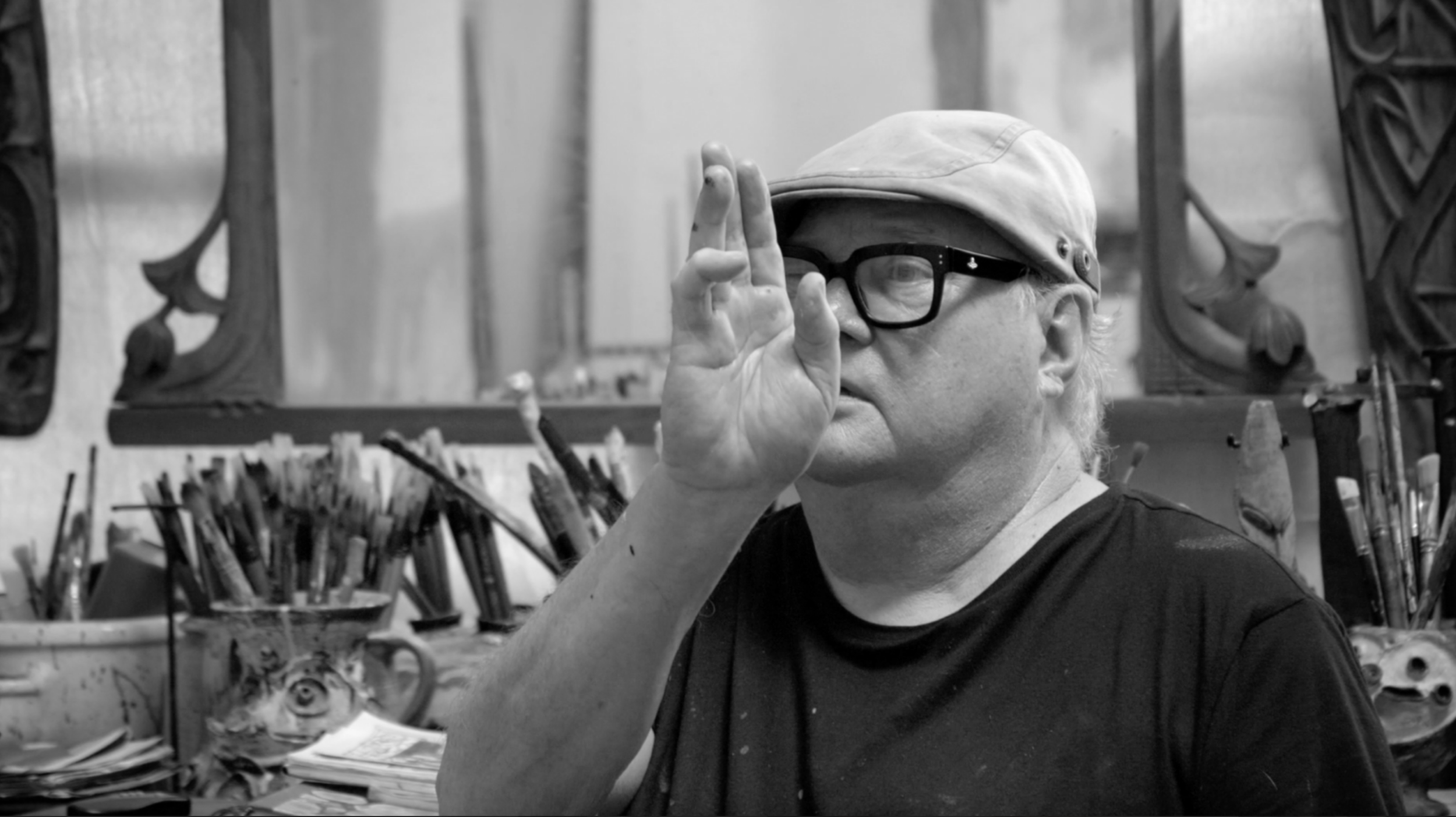
Title: Li River Landscape
(Pale Peak and Mist)
Ping Chen
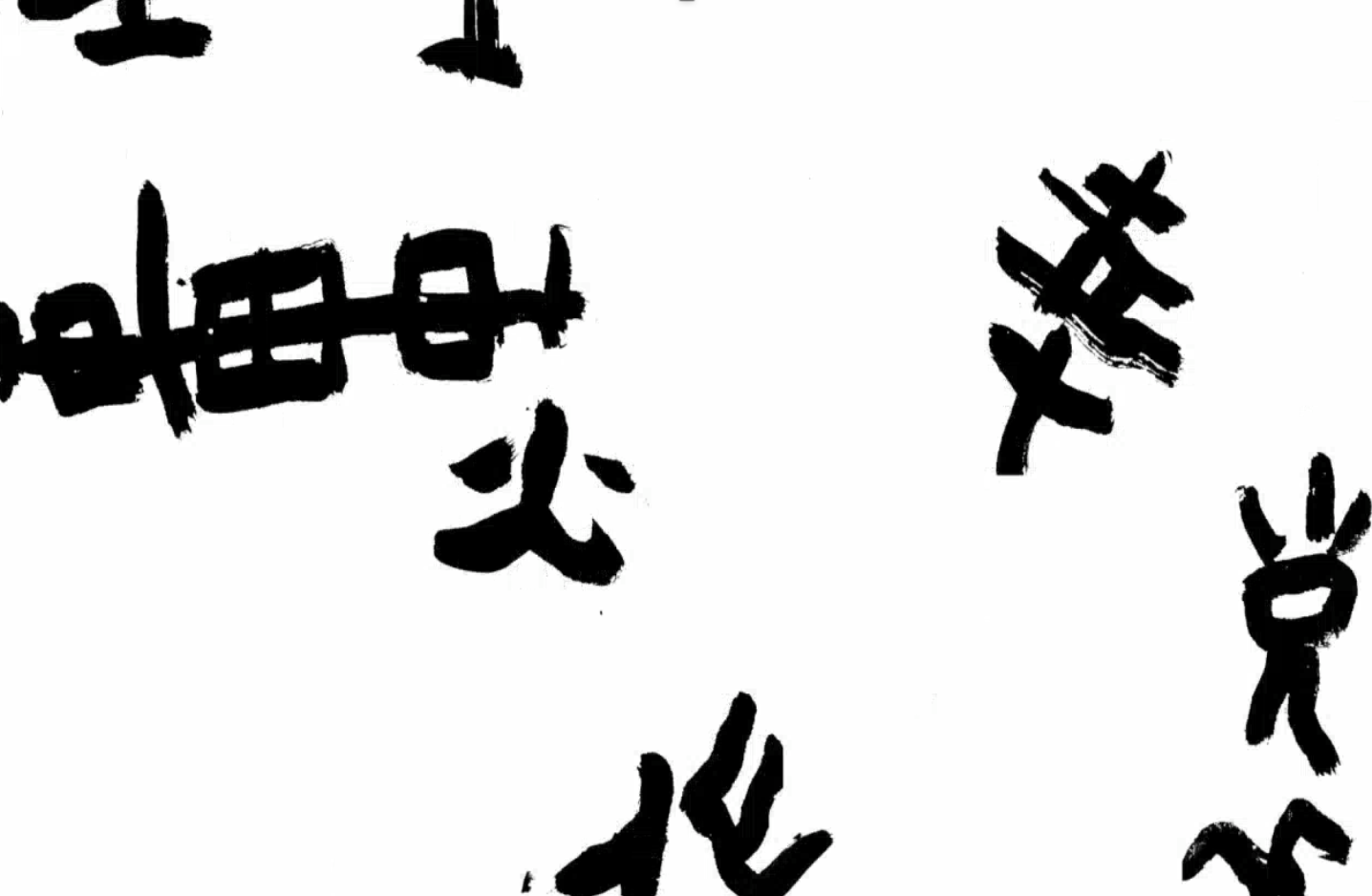
Title: Transcendental Landscape
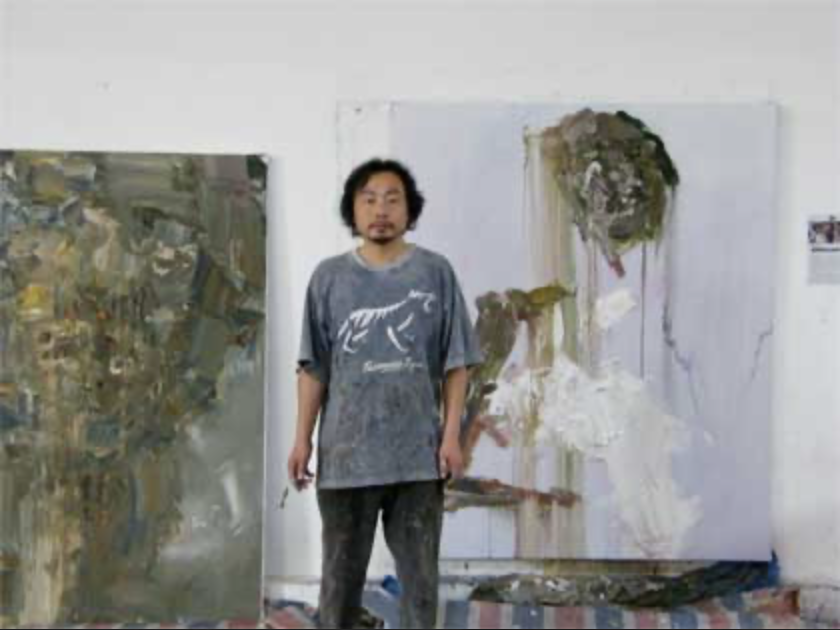
The cognitive structure of visual art has long evolved through two image systems — abstraction and representation — shaped by collective experience and memory across history. Early Chinese and Australian Aboriginal art both expressed their understanding of nature and cultural landscapes through symbolic and pictographic forms. My practice draws on the study of Chinese oracle bone script, deconstructing its graphic structures into elemental visual forms.
Through digital animation, I reinterpret ancient Chinese myths, and by integrating advanced electronic technologies such as transparent LED screens, I transform them into contemporary urban lightscapes. This creative process bridges the mythic and the modern, generating a transcendent visual experience that reveals shared sensibilities and cross-cultural connections between ancient imagination and present-day realities.
Qingyan Hu
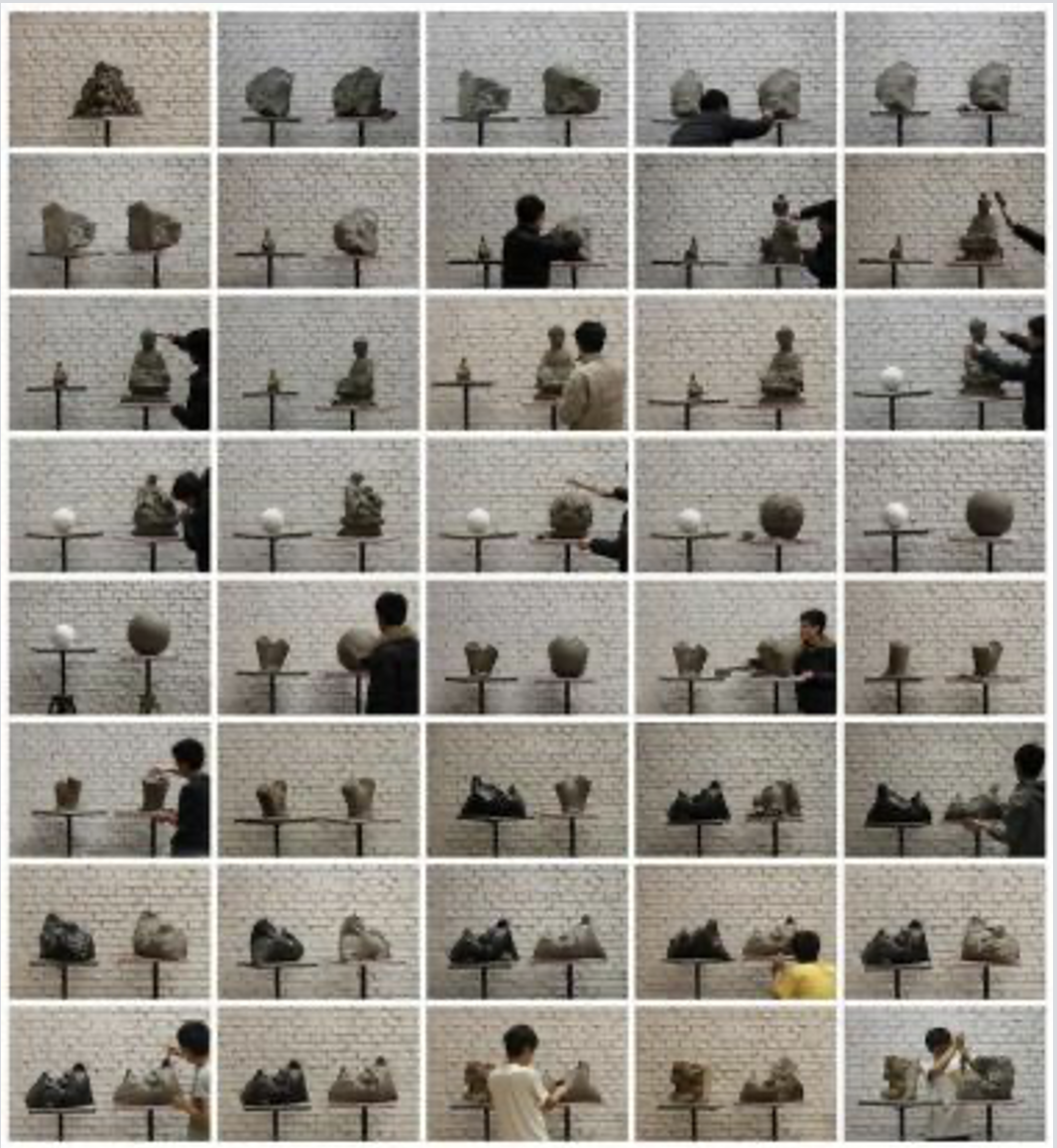
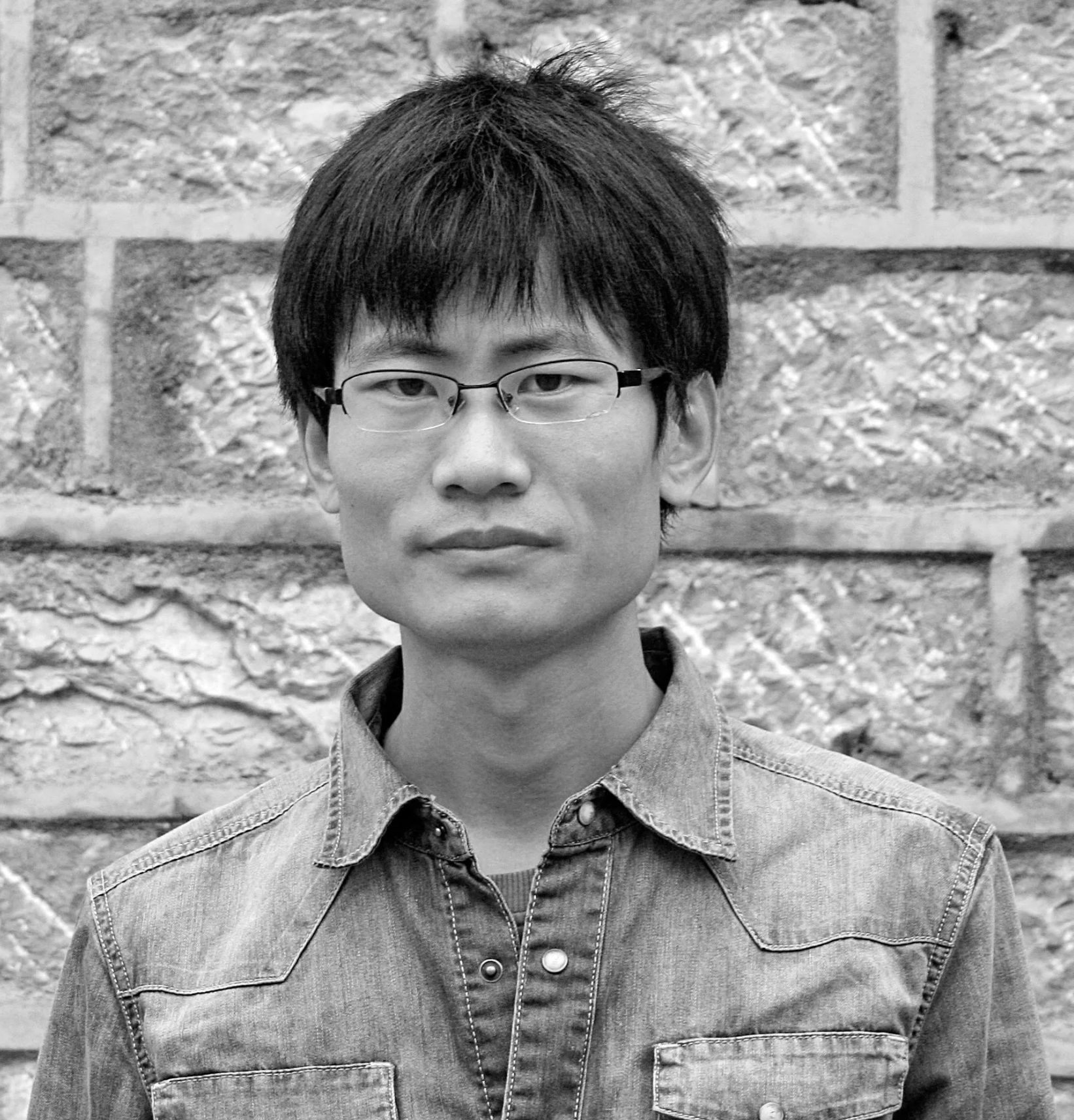
Title: Landscape on the Sculpture Plinth
In 2010, I made a highly realistic clay study of a stone. Rather than casting and preserving it, I reshaped the same material into another form, a Buddha figure. Since then, this same mass of clay has been continuously reworked into different images, unfolding like an extended, episodic sequence.
Clay itself is a neutral material, without inherent cultural meaning. It can be “filled” with countless forms, yet the brevity with which each image exists leaves the material fundamentally unchanged, still “empty,” much like its original state fifteen years ago.
Rainbow Chan
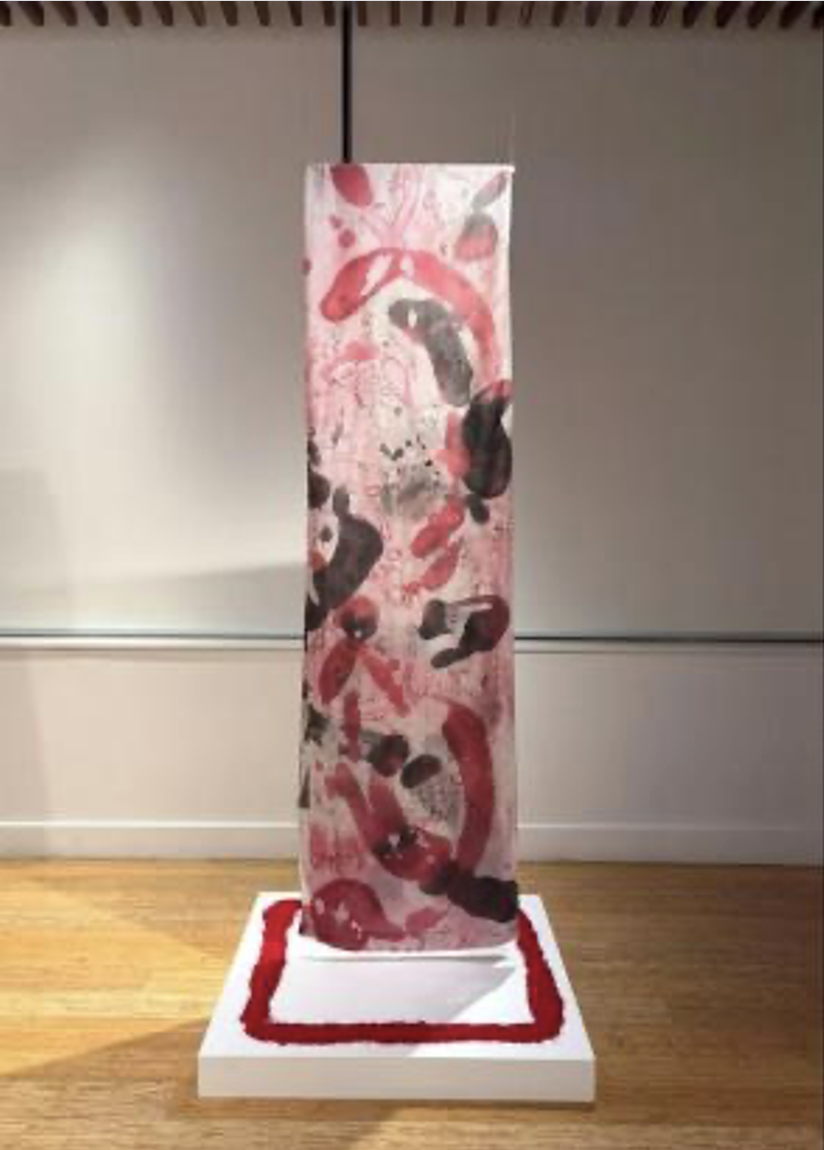
Title: Portals II
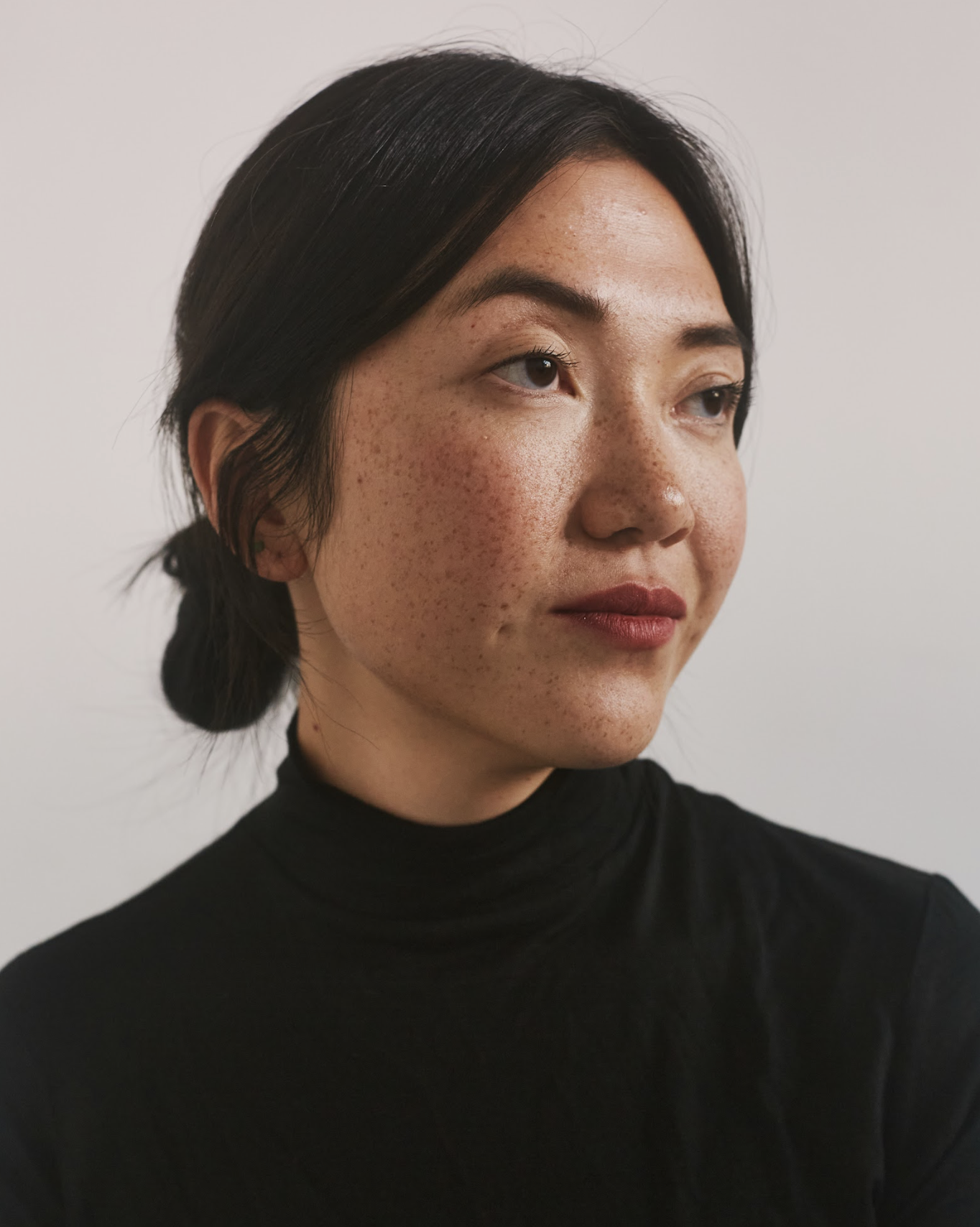
"Portals II" reimagines landscape as an emotional terrain shaped by migration, matrilineal history and song. Rooted in my Weitou heritage (Hong Kong’s earliest settlers) the work draws on endangered bridal laments: ritual farewells performed by women before arranged marriages. Half sung and half wept, these songs offer a historical lens through which to consider contemporary experiences of displacement, gender and belonging.
"Portals II" centres on the lament “Opening the Mouth,” in which dawn—symbolising new beginnings—is described as vermillion fish scales cracking open the eastern sky above rice fields. Here, landscape becomes a score for the young woman’s pain. I transcribe the lyrics onto silk through gestural ink marks and perforations made with flame. These processes render the Chinese characters as both presence and absence, with light and shadow activating the layered silk. "Portals II" connects past and present, honouring women's resilience across generations of migration and song.
Rosemary Lee
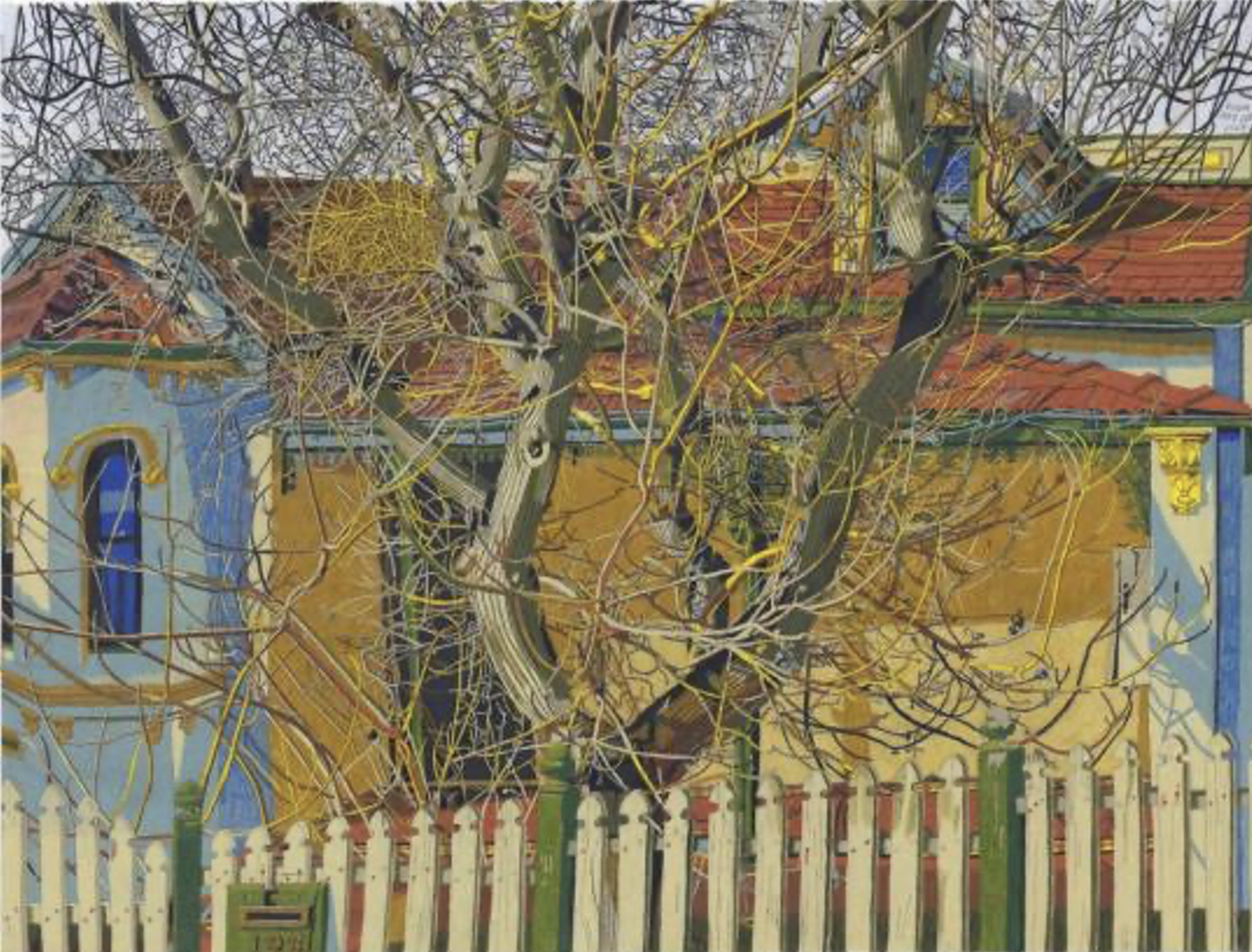
Title: 24-6
I have drawn a Chinese tallow tree in front of a suburban Australian home. The composition is flat and saturated with vivid hues, evoking both the sunburnt palette of Australia and the ornamental precision of traditional Chinese imagery.
The Chinese tallow tree is an ornamental species introduced to Australia. For me, it is a symbol of cultural transplantation and thriving. Here, stripped bare of its leaves, it reflects cycles of adaptation and loss, of what endures and what fades in the blending of cultures.
By placing this tree before an Australian home, the work considers how cultural forms, like people, plants, and aesthetics, take root in new landscapes and how beauty and displacement often share the same soil.
Ruth Ju-shih Li
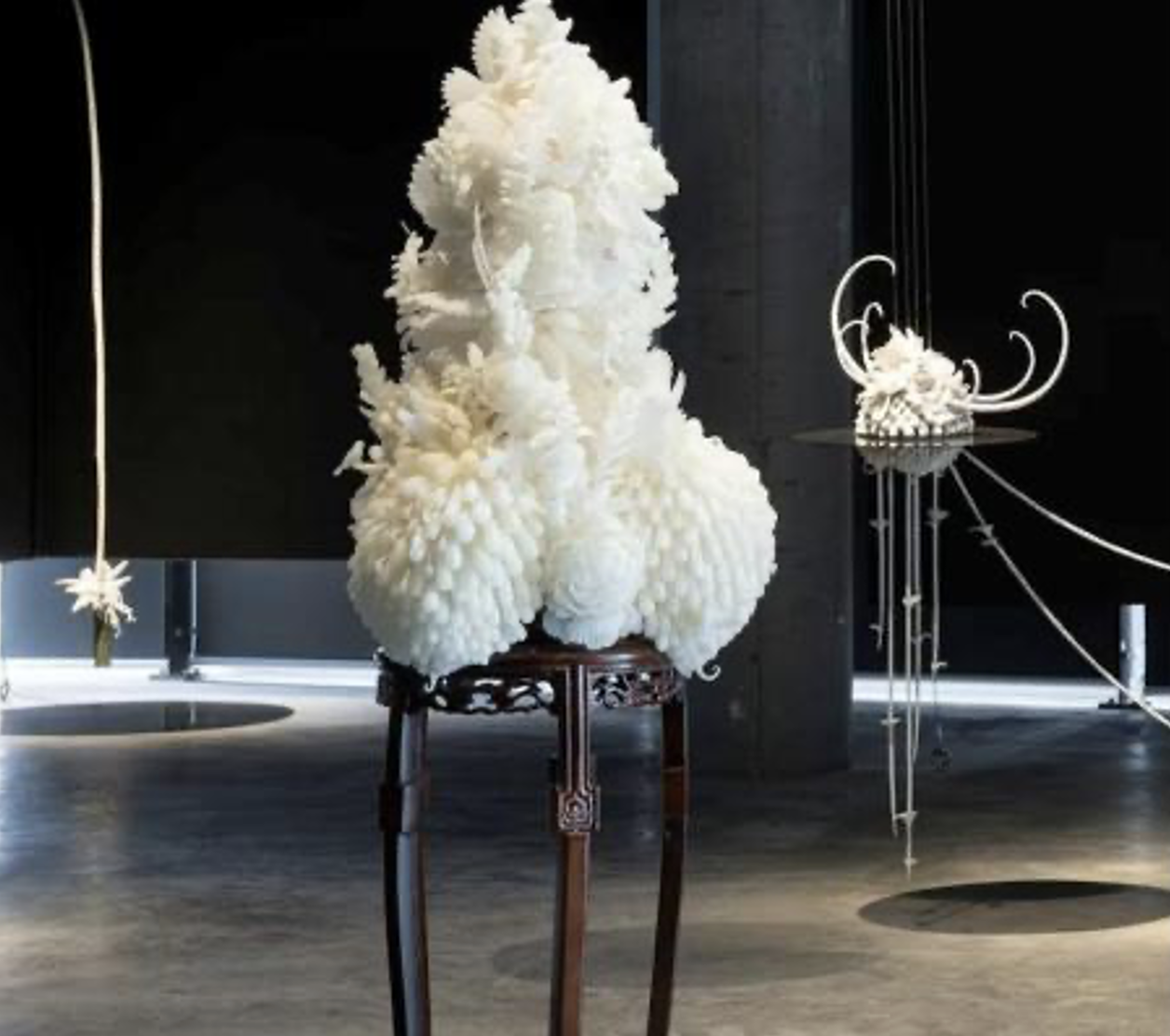
Title: Florilegium
Florilegium is an ephemeral wax sculpture that reimagines landscape as an expanded, living, and embodied field shaped by memory, culture, and lived experience. Blooming in imagined, monochromatic floral forms drawn from the artist’s memories, the work speaks in the universal language of flowers. Its abstract, chimerical forms draw inspiration from both Australian and Taiwanese flora and fauna, interwoven with recollections of incense rituals from the artist’s grandmother’s home in Taiwan.
Existing in a suspended state until activated by fire, the sculpture utilises scent and time as materials, unfolding through transformation, softening, and dissipation. This process embodies an ongoing state of becoming and an ambiguous ontological flux. Through material process, ritual activation, and symbolic form, Florilegium proposes landscape as a living, evolving terrain shaped by the convergence of cultures, memory, and ritual, reflecting the hybrid and continually forming nature of contemporary Australian landscape.